How to Spot the Jacobite Steam Train (Hogwarts Express): Best Locations & Times
How to see the real Hogwarts Express at Glenfinnan Viaduct
One of the most iconic scenes in the Harry Potter films, the Hogwarts Express sweeping across a curved stone viaduct in the Scottish Highlands, is completely real.
That train is the Jacobite Steam Train, and the viaduct is Glenfinnan, a dramatic railway bridge set among Highland mountains overlooking the deep blue waters of Loch Shiel. And yes, it genuinely looks exactly like it does in the films.
A black steam locomotive pulling deep red carriages curves slowly across the arches while white steam drifts across the landscape. The mountains sit behind the viaduct, the loch stretches out beside it, and the whole scene feels almost cinematic, even when you are standing there in typical Scottish weather with a crowd of other travellers quietly watching the tracks waiting for it to appear.
Despite how famous it has become, Glenfinnan still feels surprisingly wild and peaceful. There are no big theme park signs or Harry Potter attractions here, just a historic railway line cutting across one of the most beautiful landscapes in the Highlands.
But seeing the train cross the viaduct is not something you can just turn up and hope for. The Jacobite only runs at specific times, and if you do not know when the train passes, where to stand, and how early to arrive, it is very easy to miss it.
I planned this stop during a Scotland road trip, and it ended up being one of the highlights of the entire journey. Watching the train appear around the bend and glide across the viaduct in the middle of the Highlands is one of those travel moments that genuinely feels a little bit magical.
So here is exactly how to see the real Hogwarts Express at Glenfinnan Viaduct.
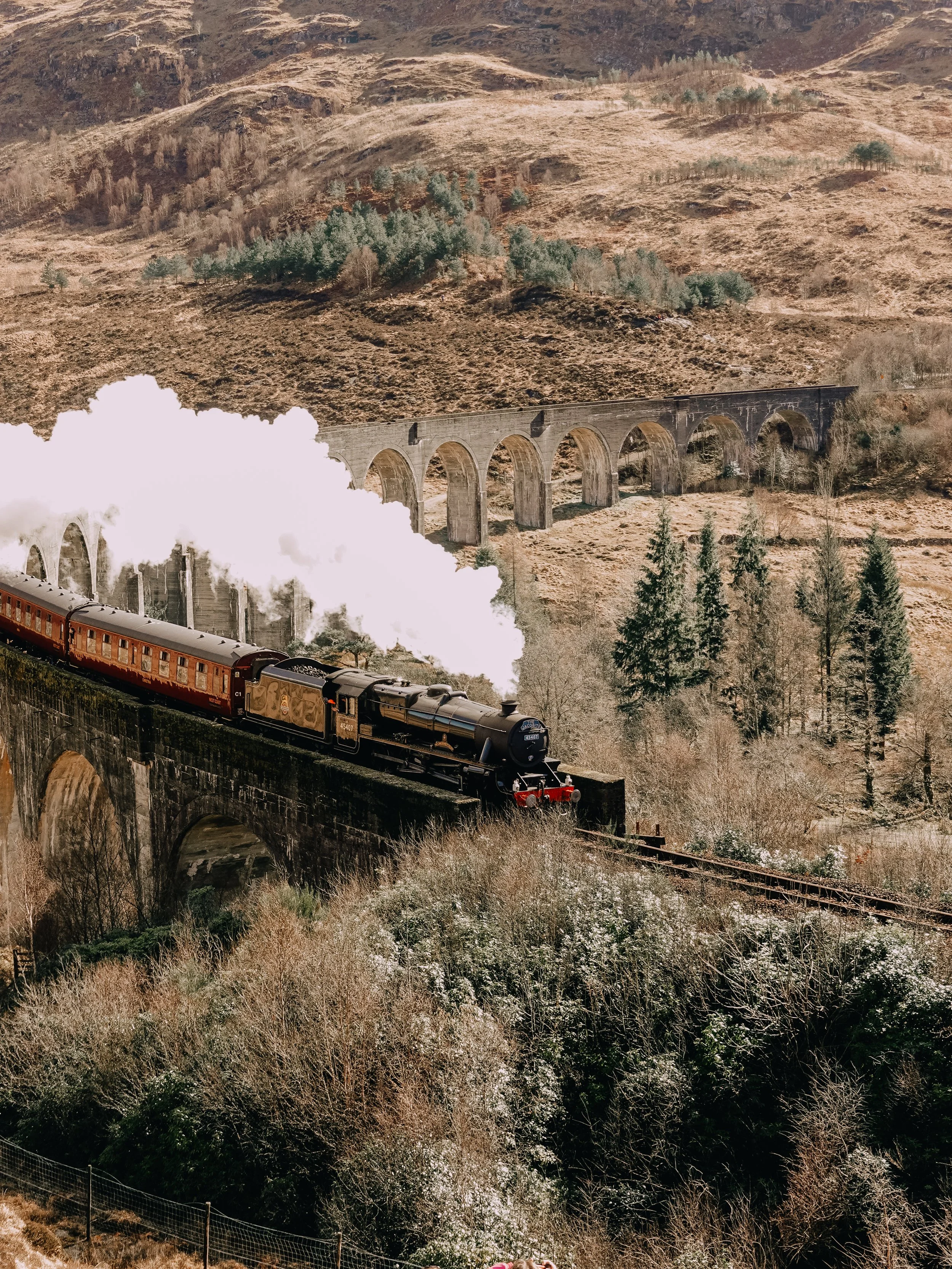
What is the Jacobite Steam Train?
The Jacobite Steam Train is a historic tourist train that runs through the Scottish Highlands between Fort William and Mallaig, following part of the famous West Highland Line.
It is widely considered one of the most scenic railway journeys in the world. The railway line itself dates back to 1901, while the heritage steam service began operating in the 1980s to bring visitors into this remote part of the Highlands.
Although the journey is only around 40 miles, it passes through remarkable scenery including lochs, mountains, small villages, and dramatic coastal landscapes.
The train itself looks like it belongs to another era, with a black steam locomotive pulling classic red carriages, which is exactly why it was chosen to represent the Hogwarts Express in the Harry Potter films.
The name “Jacobite” also reflects the region’s history, referring to the political movement that supported the Stuart kings. This part of Scotland played a major role in the Jacobite uprisings, including the famous 1745 rebellion that ended at the Battle of Culloden.
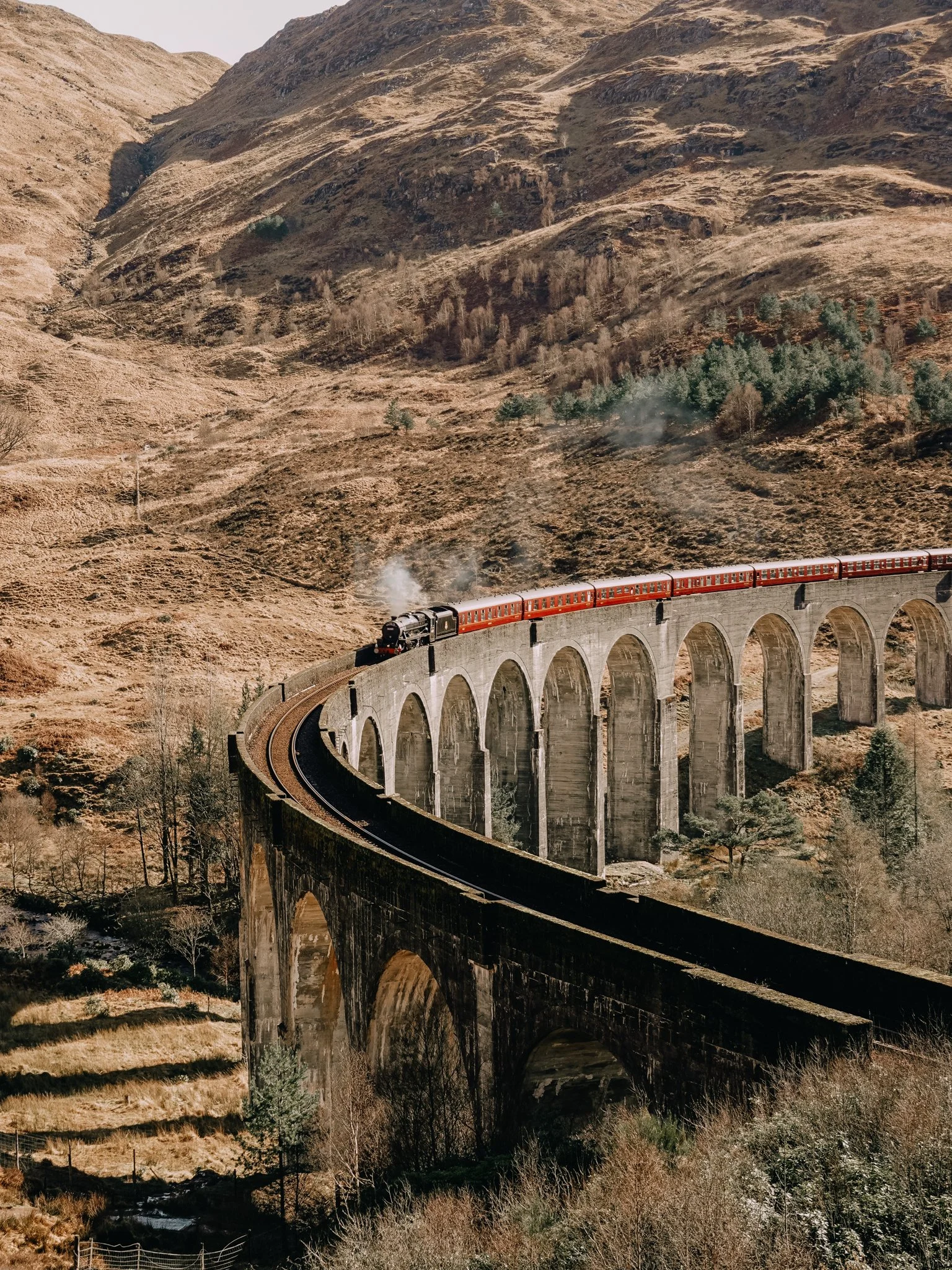
When the Harry Potter Train Crosses the Viaduct
The Jacobite Steam Train runs between April and October, with either one or two services each day depending on the season.
During peak months, usually from May to September, there are often two trains daily, meaning the Glenfinnan Viaduct is crossed four times a day, twice in each direction.
If you want the classic view of the train approaching the curve of the viaduct, you will want to watch one of the services travelling from Fort William toward Mallaig. From this direction, you see the locomotive at the front of the train as it curves across the bridge.
When the train travels from Mallaig back toward Fort William, you will mostly see the back of the train as it leaves the viaduct.
The train typically reaches the viaduct around 30 minutes after departing Fort William, so it is worth arriving early to secure a good viewing spot before it appears around the bend with the Highland mountains behind it.
| Train Direction | Approximate Viaduct Crossing Time |
|---|---|
| Morning train from Fort William | Around 10:45 am |
| Afternoon train from Fort William | Around 1:20 pm |
| Morning train from Mallaig | Around 3:00 pm |
| Evening train from Mallaig | Around 5:55 pm |
Tip: Tip: Plan to arrive at least an hour early, as parking is extremely limited and fills up quickly.
I arrived about two hours early and had no trouble finding a space. I used the extra time to walk over to Loch Shiel and the Glenfinnan Monument, then headed up the track to the viaduct viewpoint. I reached the viewpoint about an hour before the estimated crossing, and there were only a handful of people there, which meant I could pick a great spot with a completely clear view. Around 30 minutes before the train, the area became packed and people were stretched far along the path toward the bend, many with quite limited views of the viaduct.
Watching the Jacobite Steam Train cross the Glenfinnan Viaduct (Tour)
One of the best ways to see the Jacobite Steam Train crossing the famous Glenfinnan Viaduct is actually not on the train, but from the viewpoint.
The easiest way to do this is by booking a tour. Many tours include transport from places like Edinburgh or Glasgow, plus stops at incredible places along the way like Glen Coe and the Highlands, with timed arrival so you do not miss the train passing.
If you’d prefer to do it yourself, keep reading. I’ll show you exactly how to get there, where to park, and the best time to arrive.
Getting to Glenfinnan
The easiest way to visit Glenfinnan is by car, especially if you are travelling through the Highlands on a Scotland road trip.
The village sits on the A830, also known as the Road to the Isles, between Fort William and Mallaig, making it a very straightforward stop if you are exploring this part of Scotland.
It is one of those places that feels remote, but the drive itself is part of the experience, with incredible Highland scenery the entire way.
Below is a rough driving time guide:
| Location | Driving Time to Glenfinnan |
|---|---|
| Fort William | About 30 minutes |
| Glencoe | About 1 hour |
| Inverness | About 2 hours |
| Glasgow | About 3 hours |
| Edinburgh | About 3.5 hours |
There are two main places to park when visiting:
• Glenfinnan Visitor Centre Car Park (run by the National Trust for Scotland)
• Glenfinnan Community Car Park, located right next to it
Parking costs around £5, and during summer it fills up quickly - particularly around the times when the Jacobite Steam Train crosses the viaduct.
If you can’t find a park there is extremely limited parking along the route, there are no other real points of interest and you may be up for a long walk along a busy stretch of road so plan accordingly.
The Walk to the Viaduct Viewpoint
From the visitor centre car park, a walking path leads to the main viaduct viewpoints.
At a steady pace, the walk takes around 10 to 15 minutes, but if you prefer to take it slowly, allow 20 to 30 minutes. The track is not particularly difficult, though there is a slight incline with a few rocky steps, so just take your time if needed.
The path follows the river, passes underneath the arches of the viaduct, and then splits into two directions.
For the most famous view, turn left and head up the hill to the West Viewpoint. This is where you get the classic angle of the train curving across the viaduct with the mountains behind it.
If you would like to see the train approaching from the opposite direction, turn right and climb up to the East Viewpoint instead.
Both viewpoints are clearly signposted, and on busy days it is pretty easy to just follow the crowd heading up the hill.
The map on the below shows the walking route from the car park to the West Viewpoint.
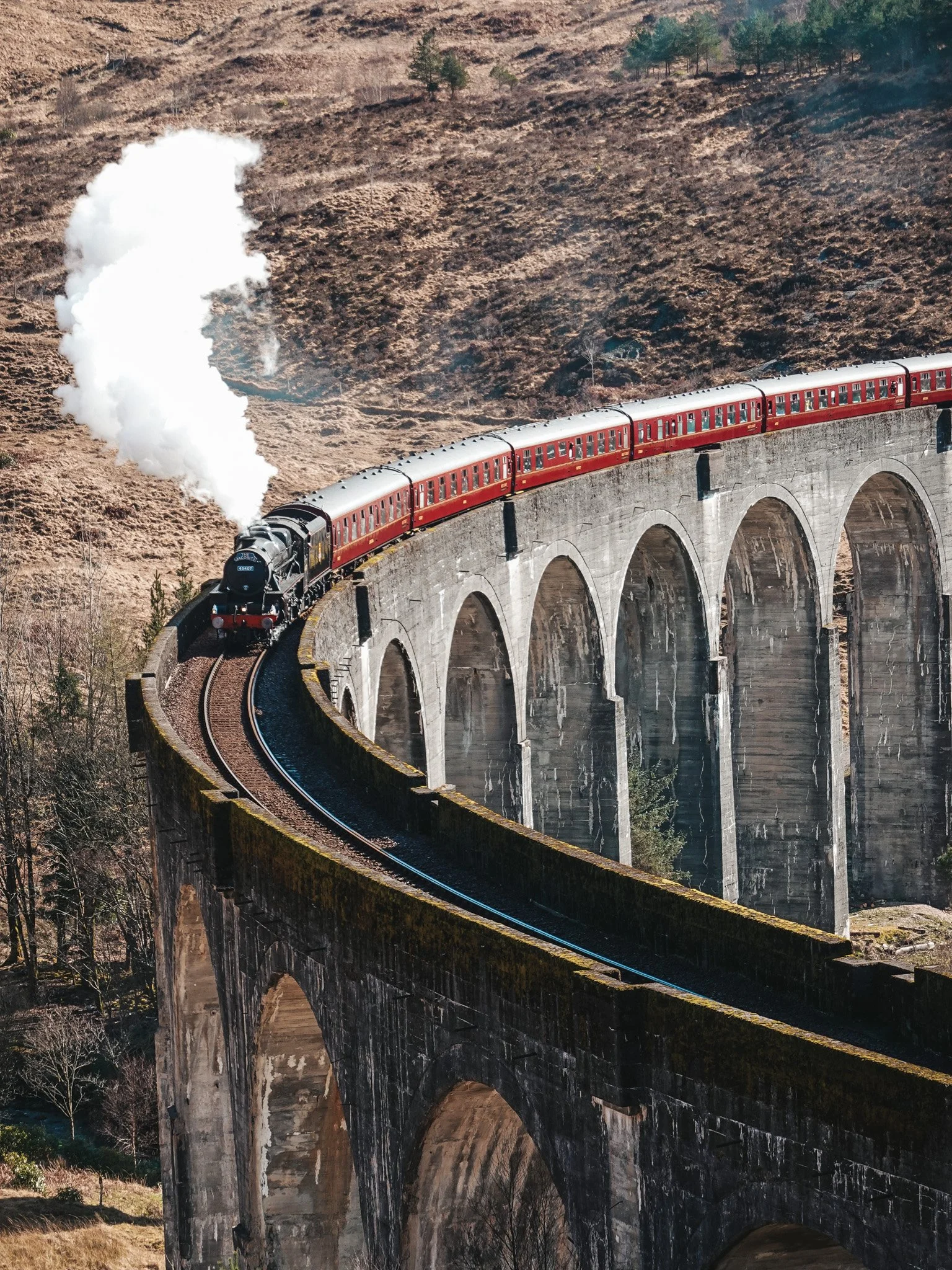
Morning crossing from the West viewpoint
The Train Crossing
As the train approaches, you will usually hear it before you see it. A distant whistle echoes through the valley, and often a plume of steam begins rising above the trees and hills before the locomotive comes into view.
The Jacobite slows down as it crosses the viaduct, which gives you plenty of time to watch the moment and take photos rather than rushing to capture it.
The full crossing takes around two minutes, as the train curves slowly across the arches with the mountains behind it.
And yes, when it finally appears and rolls across the bridge, it really does feel a little like watching the Hogwarts Express arrive.
For the best angles and camera settings, see my photography tips below.
Best Viewpoint and Photography Tips
If you are coming to Glenfinnan specifically to watch the train crossing the viaduct, and let’s be honest, most people are, there is really one spot that gives you the classic view: the West Viewpoint.
This hillside sits slightly above the viaduct and gives you the famous angle where the train curves across the bridge with the mountains behind it. It is the perspective you have probably seen online, with the train approaching from the left, steam drifting across the valley, and the full arc of the viaduct below.
From here, you will see the train travel from Fort William toward Mallaig, which creates the iconic sweeping curve across the bridge. You will usually hear the whistle before you see the train, followed by the plume of steam rising through the valley.
Photography tips
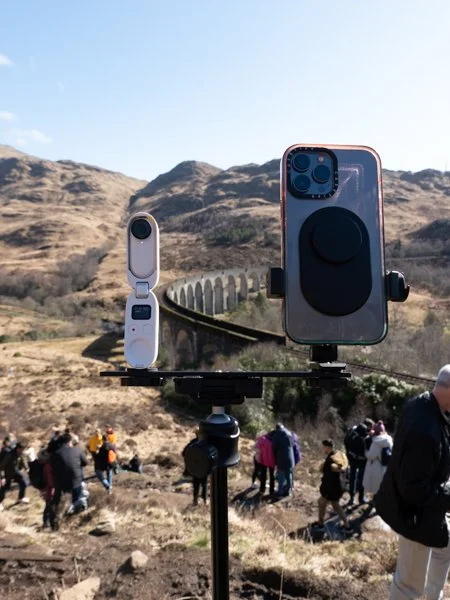
Use a tripod if possible. Many people set up two cameras, one for photos and one recording video.
Use a wider lens so you can capture the full curve of the viaduct with the surrounding Highlands landscape.
Stand slightly higher up the slope to avoid people in your frame. Once you reach the viewpoint at the very end, you will find some raised flat areas that work well.
The train moves quite slowly, so you will have time to take multiple photos.
The driver often pauses mid-viaduct and lets the steam build, which creates the most dramatic moment for photos.
There is also the East Viewpoint on the opposite side of the viaduct where the train approaches more directly toward you, but for the most iconic shot, the West Viewpoint is the one to choose.
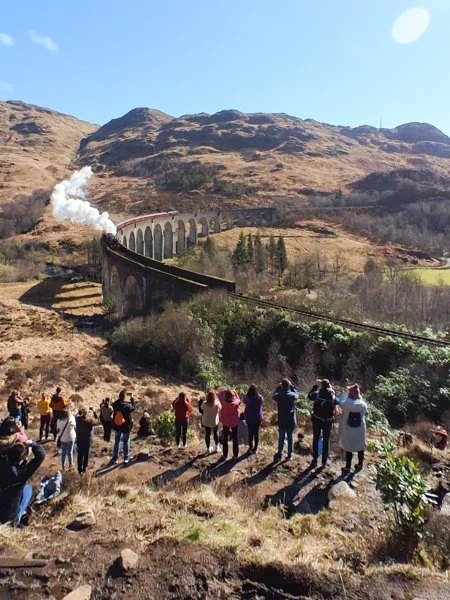

Everything I use when planning a trip, all in one place.
This page may contain affiliate links. I may earn a small commission at no extra cost to you. Learn more →
