Cutest Places in France (Outside Paris)
If you’re looking for the cutest places in France outside Paris, this guide covers the towns and villages that are genuinely worth going out of your way for.
France has no shortage of beautiful places, but some stand out for how well they’ve been preserved and how they actually feel when you’re there. Think medieval streets, canal towns, coastal harbours, and places that still feel consistent rather than overdone.
This guide is curated, not exhaustive, and focuses on the places that actually stand out. You’ll find what each place is like, where it is, and how to visit it properly as part of a wider France itinerary.
Jump to:
Colmar • Riquewihr • Strasbourg • Honfleur • Bayeux • Auxerre • Fougères • Mont-Saint-Michel • Giverny • Le Mans • Annecy • Saint-Tropez • Gordes • Map • Route • Plan your trip
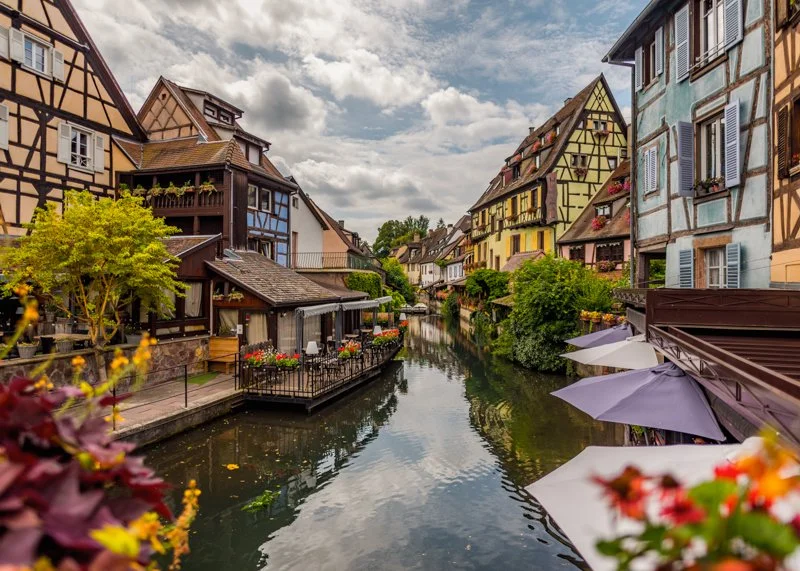
Colmar, Alsace (Northeast France near Germany)
You can visit Colmar independently, or as part of a guided Alsace wine route tour from Strasbourg or Basel. If you want an easier option, you can browse top-rated Colmar tours here, which often include nearby villages like Riquewihr.
Colmar built its wealth through wine trading during the Middle Ages, and that shows in how well everything has been preserved. Many of the half-timbered houses date back to the 14th to 16th centuries, and the level of detail across the entire old town is consistent.
The canal area, known as Little Venice, is the most photographed part, but it is not just one section that stands out. The whole town feels styled, with colourful facades, shutters, flowers, and small details everywhere you look.
Colmar is also one of the most famous Christmas towns in France, known for its markets, decorations, and the oversized teddy bears placed throughout the streets and shopfronts during winter.
Why visit Colmar
- Canal-lined streets with colourful half-timbered houses
- Strong medieval and Renaissance history
- One of the best Christmas destinations in France, known for markets and decorations
- Easy base for exploring the Alsace Wine Route
How to get to Colmar
Colmar is located in the Alsace region in eastern France, close to the German border. The easiest way to get there is by train from Strasbourg, which takes around 30 minutes, or from Basel in Switzerland in under an hour.
If you are visiting from Paris, the fastest option is the TGV to Strasbourg, followed by a short regional train connection to Colmar. Driving is also a good option if you want to explore multiple towns along the Alsace Wine Route.
Best time to visit Colmar
Colmar is worth visiting year-round, but the experience changes depending on the season. Spring and summer bring flowers and warmer weather, while autumn is ideal for wine season and fewer crowds.
December is the most popular time to visit, when the Christmas markets transform the town with decorations, lights, and festive stalls throughout the old town.
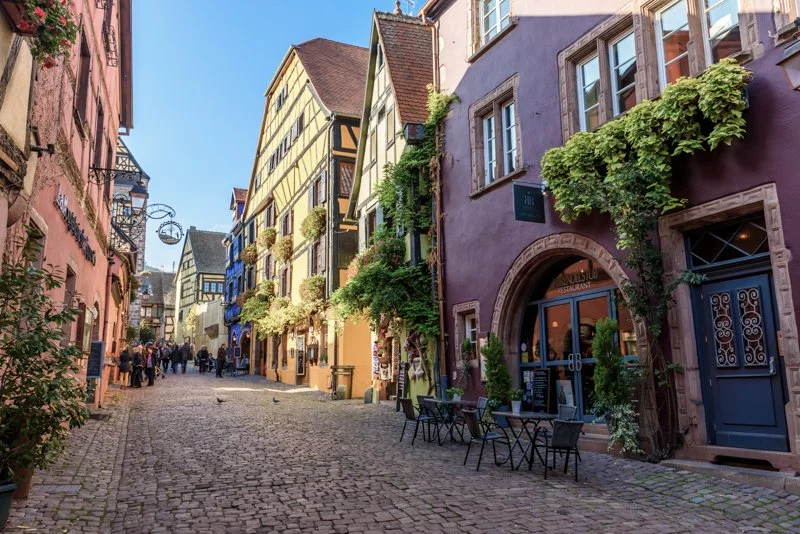
Riquewihr, Alsace (Alsace Wine Route)
Riquewihr is located about 20 minutes from Colmar along the Alsace Wine Route, one of the most scenic regions in France.
The village is still enclosed by its original defensive walls and follows its medieval layout almost exactly. Most of the buildings you see today date back to the 1500s, with colourful facades, timber framing, and details that have been carefully maintained over time.
It’s smaller than Colmar and can be walked in under an hour, but that’s part of the appeal. You’re not here to rush, just to wander the main street, take it in, and enjoy the setting surrounded by vineyards.
It’s also an easy stop if you’re exploring the Alsace region, especially between Strasbourg and Colmar, or as part of a wine route day trip.
Best way to visit Riquewihr
See Alsace wine tours that visit Riquewihr, Colmar, and nearby villages
Why visit Riquewihr
- One of the best-preserved medieval villages in France
- Located along the Alsace Wine Route, surrounded by vineyards
- Smaller, quieter alternative to Colmar
- Easy stop between Strasbourg and Colmar or on a wine tour itinerary
How to get to Riquewihr
Riquewihr does not have a train station, so the easiest way to visit is by car or as part of a guided tour. It’s around a 20-minute drive from Colmar and just under an hour from Strasbourg.
If you are not driving, joining a small group Alsace wine route tour is the most straightforward option, as these typically include multiple villages in one day.
Best time to visit Riquewihr
Riquewihr is a year-round destination, but it is especially popular in spring and summer when the vineyards are green and the village is in full bloom.
Autumn is ideal for wine season, while December is one of the busiest times, when the village becomes part of the Alsace Christmas markets, with decorations and stalls throughout the streets.
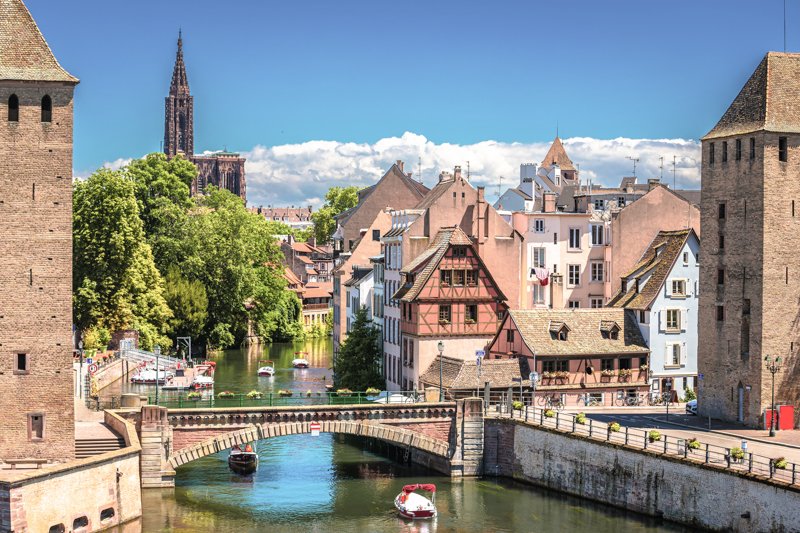
Strasbourg, Alsace (Capital of Alsace)
Strasbourg sits directly on the border with Germany and has shifted between French and German control multiple times throughout history.
That mix shows in the architecture, culture, and layout of the city, and it’s what makes Strasbourg feel different to the rest of France.
The historic centre, Grande Île, is a UNESCO World Heritage Site. The Petite France district is where you’ll find canals, timber-framed houses, and some of the most photographed streets in the country.
Strasbourg also works really well as a base for exploring the region. You can join a wine tour from Strasbourg that takes you through the Alsace villages, or do a guided walking tour to properly understand the history and layout of the old town.
If you’re visiting in winter, the Christmas market tours are one of the best ways to see Strasbourg and nearby towns when everything is decorated.
Top tours in Strasbourg
Alsace wine route half-day tour from Strasbourg
Christmas markets and Alsace villages full-day tour
Guided walking tour of Strasbourg
Why visit Strasbourg
- Strasbourg Cathedral, one of the most famous Gothic landmarks in France
- Canal network, bridges, and historic Petite France district
- Unique mix of French and German architecture and culture
- Easy base for wine tours and Alsace day trips
How to get to Strasbourg
Strasbourg is well connected by train, with direct TGV services from Paris taking around 2 hours. It’s also easily accessible from nearby cities like Colmar and Basel.
If you’re flying, Strasbourg Airport is located just outside the city, or you can fly into Basel or Frankfurt and travel in by train.
Best time to visit Strasbourg
Strasbourg is worth visiting year-round, but it’s especially popular in spring and summer when the canals and old town are at their best.
December is one of the busiest times to visit, when Strasbourg hosts one of the most famous Christmas markets in Europe, with decorations and stalls across the entire city.
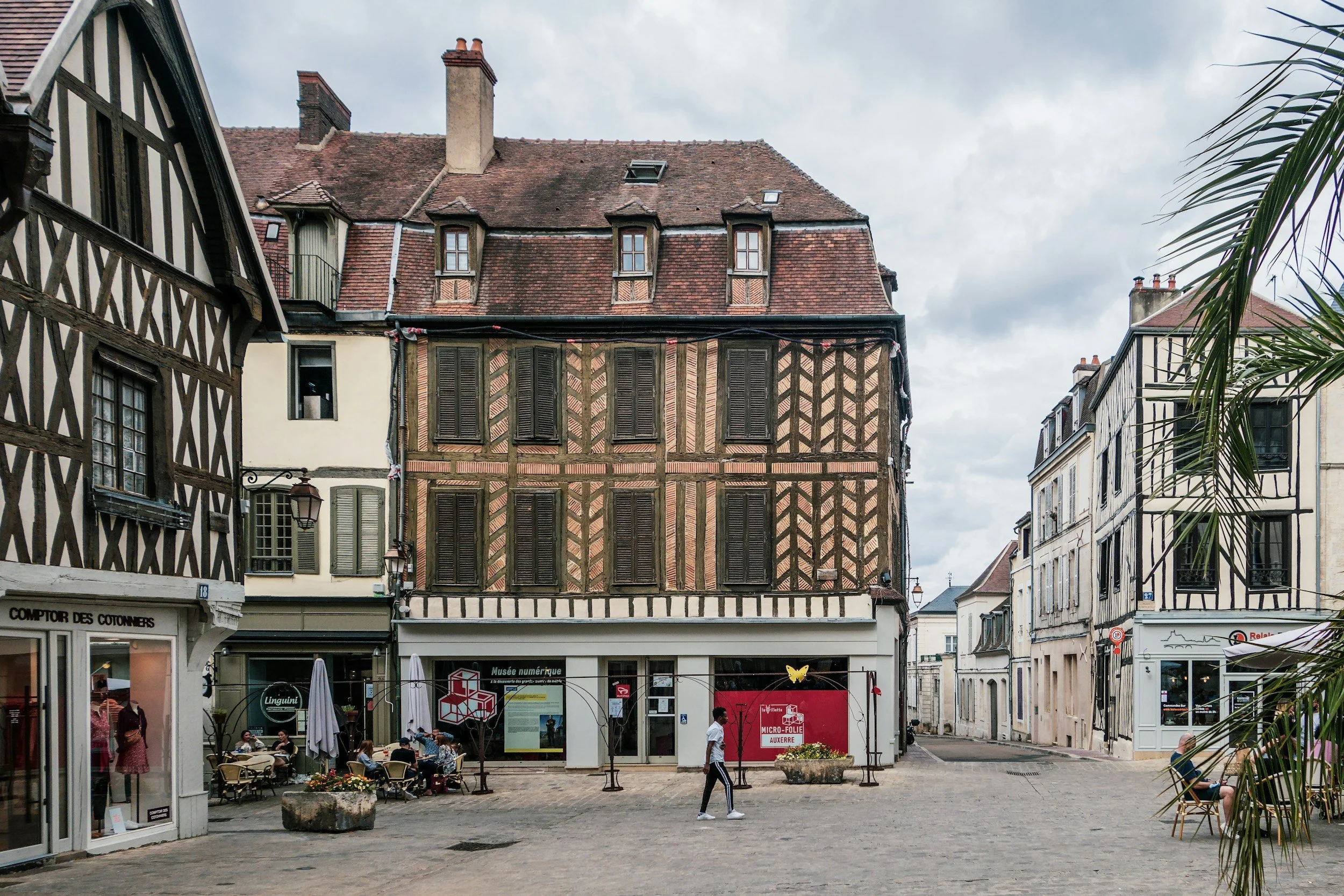
Auxerre, Burgundy (Yonne River Town)
Auxerre sits in the Burgundy region of central France, around 1.5 to 2 hours from Paris, and is one of those places that feels overlooked compared to other destinations in the country.
The town is built along the Yonne River, with timber-framed houses, narrow streets, and a skyline dominated by the Cathedral of Saint-Étienne. From across the river, you get one of the best views in the region, with the cathedral rising above the old town.
Walking through Auxerre feels quieter and less polished than places like Annecy or Colmar, but that’s part of what makes it stand out. It feels more local, with fewer crowds and a slower pace.
It’s also located in one of France’s most well-known wine regions, which makes it a good stop if you’re exploring Burgundy or travelling between Paris and the south.
Things to do in Auxerre
Auxerre is best explored on foot, but there are a few unique experiences that give you a different perspective of the town.
Why visit Auxerre
- Underrated river town with a cathedral skyline
- Timber-framed houses and historic old town streets
- Located in the Burgundy wine region
- Quieter and less crowded than more well-known destinations
How to get to Auxerre
Auxerre is around 1.5 to 2 hours from Paris by train, making it an easy trip from the capital.
It’s also well positioned for road trips through Burgundy, especially if you’re exploring wine regions or travelling south.
Best time to visit Auxerre
Auxerre is best visited from spring through early autumn, when the weather is suitable for walking and exploring the old town.
Summer brings a livelier atmosphere, while spring and autumn offer fewer crowds and a more relaxed experience.
Honfleur, Normandy (Seine River Harbour Town)
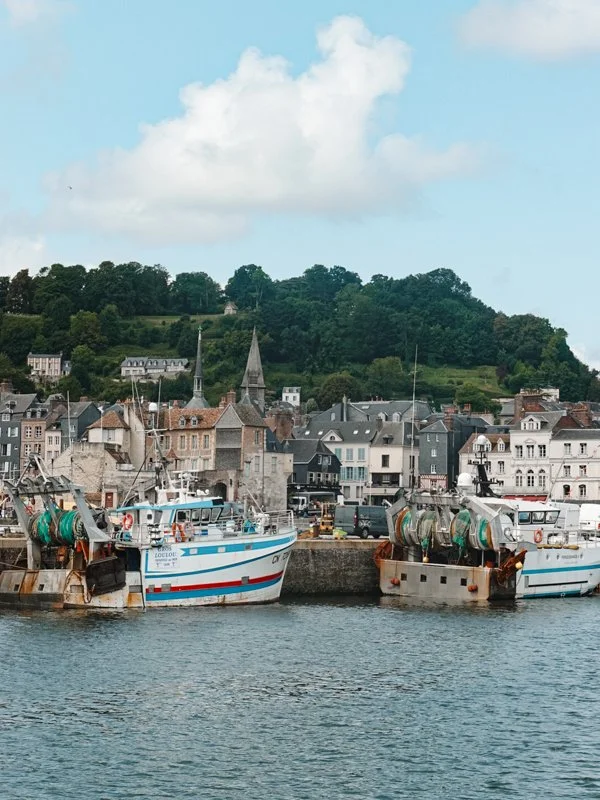
Honfleur sits at the mouth of the Seine River in Normandy and became an important port in the 17th century, playing a key role in trade and early exploration.
The main harbour, Vieux Bassin, is what draws most people in. It’s lined with tall, narrow buildings that were originally designed to maximise space along the waterfront, and now create that iconic reflected view across the water.
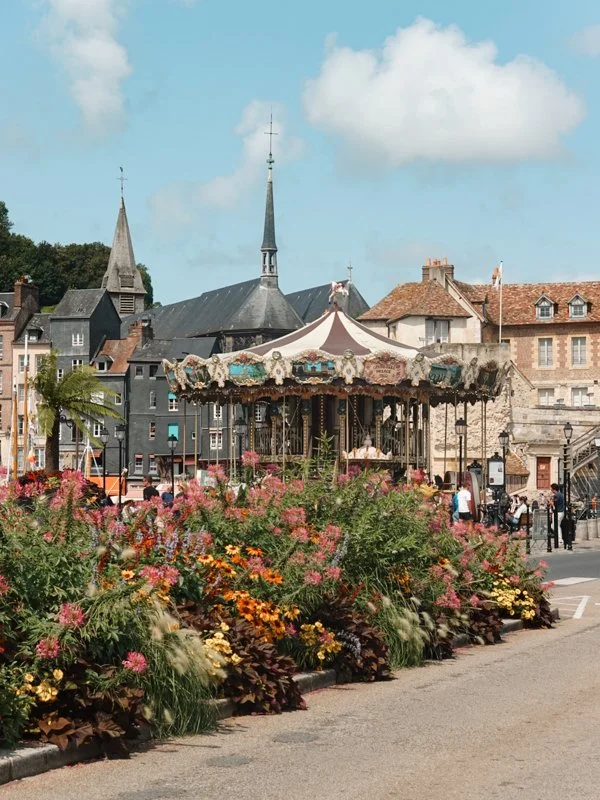
What makes Honfleur stand out is everything around that harbour. There’s a traditional old-style carousel set just back from the port, with that gold, almost royal look to it, which adds to the whole feel of the place rather than taking away from it.
Around that, you’ve got small gardens, open spaces, and boats constantly moving through the harbour, which keeps it feeling active without being chaotic.
The streets just behind the harbour are filled with cafés, galleries, and working art studios. This is where the town’s connection to Impressionist artists like Monet comes from, many of them painted here, drawn to the light and reflections.
It’s an easy place to explore on your own, but doing a walking tour of Honfleur gives you more context around the harbour, the art history, and how the town developed.
Best way to explore Honfleur
A guided walking tour is one of the easiest ways to understand the harbour, art history, and layout of the old town.
Why visit Honfleur
- One of the most recognisable harbours in France
- Classic waterfront setting with narrow buildings and reflections across the basin
- Strong connection to Impressionist art and working studios
- Compact, walkable, and easy to explore
How to get to Honfleur
Honfleur is located in Normandy, around 2.5 hours from Paris by car. It does not have a direct train station, so the easiest option is to drive or take a train to nearby Le Havre or Deauville and continue by bus or taxi.
It’s also commonly visited as part of a Normandy day trip, often combined with other coastal towns or D-Day sites.
Best time to visit Honfleur
Honfleur is best visited in spring through early autumn, when the harbour is lively and the weather is ideal for walking.
Summer is the busiest time, while shoulder seasons offer fewer crowds with a similar atmosphere. Winter is quieter but still scenic, especially around the harbour.
Bayeux, Normandy (Base for D-Day Beaches)
Bayeux is one of the best-preserved towns in Normandy and is best known for its connection to the D-Day landings and the famous Bayeux Tapestry, which dates back to the 11th century.
Unlike many towns in the region, Bayeux was largely untouched during World War II, which is why the historic centre still feels intact. You’ll find cobbled streets, traditional buildings, and a quieter atmosphere compared to the nearby coastal areas.
It’s also one of the most popular bases for visiting the D-Day beaches. Staying in Bayeux gives you easy access to guided tours that cover key sites like Omaha Beach, Utah Beach, and the American Cemetery.
Beyond its history, Bayeux has a relaxed feel, with cafés, markets, and small streets that make it easy to explore at a slower pace.
Best D-Day tours from Bayeux
Bayeux is one of the easiest and most popular places to base yourself for visiting the D-Day landing beaches.
View the full-day American D-Day beaches tour from Bayeux
See unique sidecar tours of the D-Day landing beaches
Why visit Bayeux
- One of the best-preserved towns in Normandy
- Home to the Bayeux Tapestry, one of the most famous historical artworks in Europe
- Popular and convenient base for visiting the D-Day beaches
- Walkable historic centre with a quieter atmosphere than coastal towns
How to get to Bayeux
Bayeux is around 2.5 hours from Paris by train, with direct services from Paris Saint-Lazare. It’s one of the easiest Normandy towns to reach without a car.
If you’re planning to visit the D-Day beaches, staying in Bayeux and joining a guided tour is often the simplest option.
Best time to visit Bayeux
Bayeux is best visited from late spring to early autumn, when the weather is mild and tours to the D-Day beaches run frequently.
June is a particularly significant time to visit due to D-Day anniversary events, although it can be busier. Shoulder seasons offer fewer crowds while still maintaining a good atmosphere.
Bayeux sits in Normandy, just inland from the D-Day landing beaches, and is one of the best-preserved towns in the region.
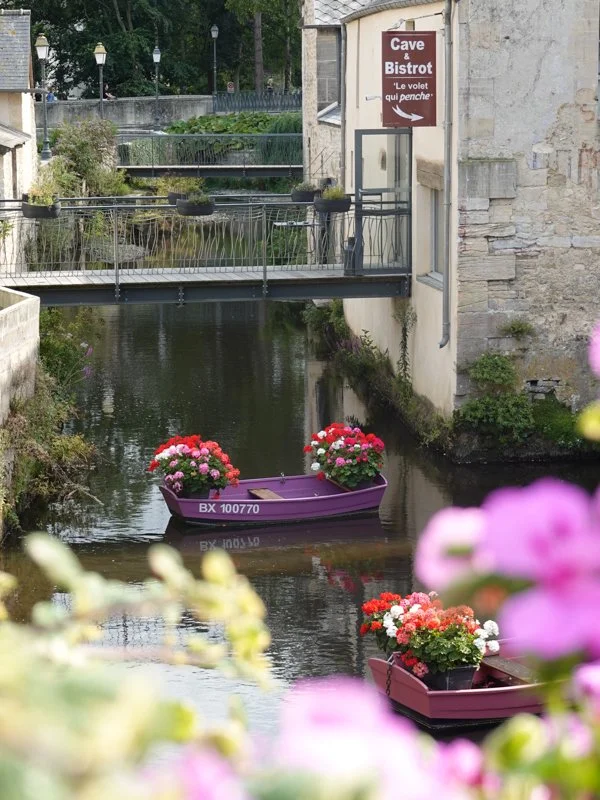
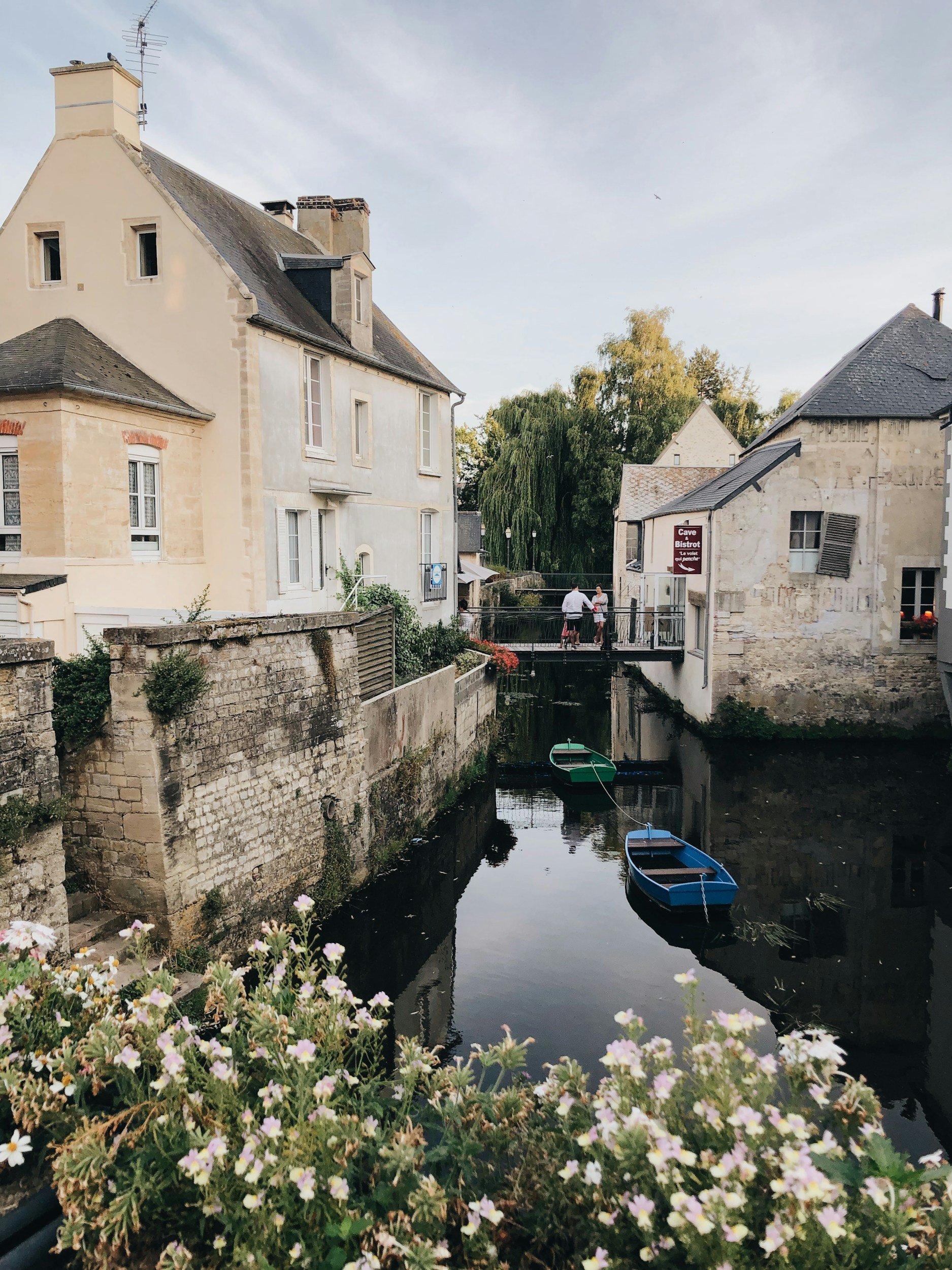
Unlike many nearby areas, it wasn’t heavily bombed during World War II, which is why the old town still feels intact. You’ll find cobbled streets, timber-framed houses, and the River Aure running through the centre, with small bridges and quiet walking paths.
The main landmark is Bayeux Cathedral, which dates back to the 11th century and dominates the skyline.
It’s also home to the Bayeux Tapestry, a nearly 70-metre-long embroidered cloth that tells the story of the Norman Conquest of England in 1066.
I’ve been, and it’s actually incredible. Much bigger than you expect, and far more detailed in person. You walk along it as the story unfolds, almost like a visual timeline.
Even if you’re not that into history, it’s still worth seeing. It gives proper context to the region, especially if you’re visiting Normandy or have any interest in British history and William the Conqueror.
Why it stands out:
One of the best-preserved towns in Normandy
Close to the D-Day landing beaches
Home to the Bayeux Tapestry and historic cathedral
Easy to walk, with a relaxed pace compared to larger cities
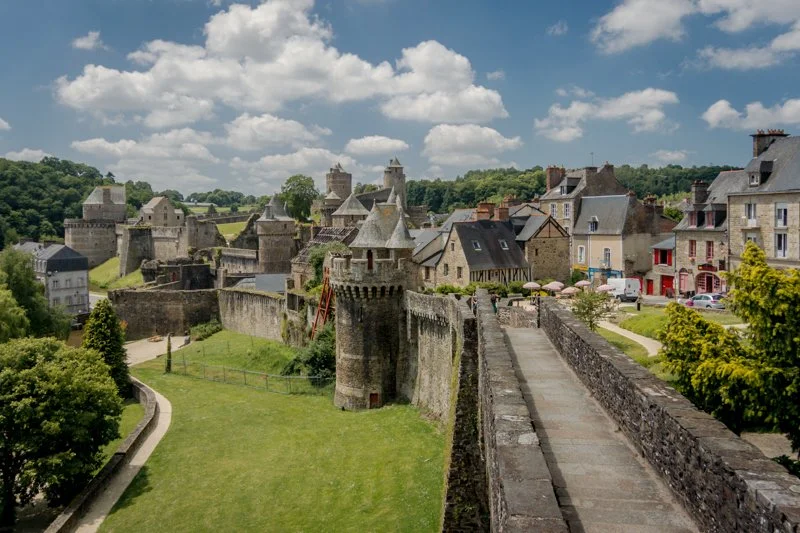
Fougères, Brittany (Near the Normandy border)
Fougères sits in Brittany, close to the Normandy border, and was originally built as a defensive town between the two regions.
The castle is the main feature, and it’s not small. It’s one of the largest medieval fortresses in Europe, with towers, walls, and a layout that still feels intact rather than restored.
Below it, the old town drops down into narrow streets, stone buildings, and a mix of timber-framed houses that feel older and less polished than places like Alsace.
I actually stumbled across Fougères with no phone reception on my first day in France, and no data because I hadn’t set up my Airalo eSIM yet.
I ended up spending a few hours here without really planning to, just walking around and taking it in. There’s a great café directly opposite the castle, right near the old water mill, and it ended up being one of those spots you don’t expect but remember.
Best way to explore Brittany towns
Fougères is best visited as part of a wider Brittany itinerary, especially if you want to see multiple historic towns in one trip.
View Brittany day tours visiting small historic towns
See guided tours in Saint-Malo and surrounding areas
Why visit Fougères
- One of the largest medieval castles in Europe
- Strong defensive history between Brittany and Normandy
- Less crowded than more well-known towns
- Feels more authentic and less curated
How to get to Fougères
Fougères is located in Brittany, around 50 minutes from Rennes by car. There is no direct train station, so the easiest way to visit is by driving or joining a regional day tour.
It can also be included as part of a broader Brittany or Normandy itinerary, especially when travelling between regions.
Best time to visit Fougères
Fougères is best visited in spring through early autumn, when the weather is suitable for walking and exploring the castle grounds.
It tends to be quieter than other destinations year-round, making it a good option if you want to avoid crowds, even during peak travel periods.
Le Mont-Saint-Michel, Normandy

Le Mont-Saint-Michel, Normandy
Le Mont-Saint-Michel sits just off the Normandy coast and has been a major pilgrimage site since the 8th century.
The abbey rises at the top of the island, with narrow streets and buildings layered below it, all surrounded by tidal water that shifts throughout the day. It’s one of those places that looks unreal in photos, but even better when you see it properly.
Walking across the causeway toward it is part of the experience. You can see it from a distance, but it doesn’t fully hit until you’re close.
If you’re planning a visit, staying overnight completely changes the experience once the day crowds leave. I’ve covered exactly how to do it in my Mont-Saint-Michel overnight guide.
Top tours to Mont-Saint-Michel
Tours are one of the easiest ways to visit, especially if you’re coming from Paris or want guided access to the abbey and village.
View Mont-Saint-Michel day trips from Paris
See guided walking tours of Mont-Saint-Michel
Browse small group walking tours of the island
Why visit Mont-Saint-Michel
- Unique island setting with constantly changing tides
- Strong religious and historical significance
- One of the most recognisable landmarks in France
How to get to Mont-Saint-Michel
Mont-Saint-Michel is located on the Normandy coast, around 3.5 to 4 hours from Paris. The easiest way to visit is by car or as part of a guided day trip.
You can also take a train to nearby Pontorson, followed by a shuttle bus to the island.
Best time to visit Mont-Saint-Michel
Mont-Saint-Michel is busy year-round, but the experience changes depending on timing. Early morning and evening are the best times to visit if you want to avoid crowds.
Spring and autumn offer a good balance of weather and fewer visitors, while summer is the busiest period. Staying overnight is the best way to experience the island once day visitors leave.
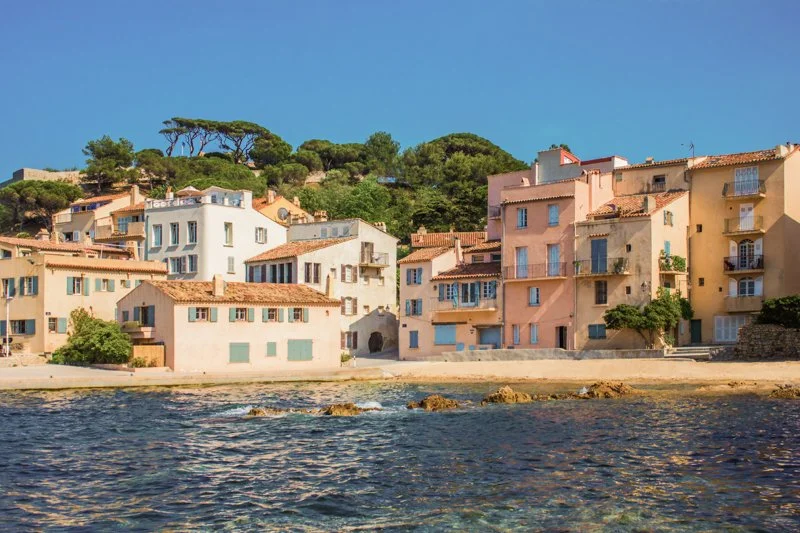
Saint-Tropez, French Riviera (Côte d’Azur)
Saint-Tropez sits along the French Riviera in the Côte d’Azur, between Nice and Marseille, and started as a small fishing village before becoming one of the most well-known destinations in southern France.
It really took off in the 1950s when Brigitte Bardot and the film industry put it on the map, and since then it’s become known for luxury, yachts, and beach clubs. That said, the old town still holds onto its original character.
The harbour, Vieux Port, is the main focal point. Pastel buildings line the waterfront, with cafés and restaurants looking out over the boats. It’s busy, but still feels contained and easy to walk.
Behind the harbour, the streets open into narrow lanes, small squares, and quieter corners that feel closer to what the town would have originally been like.
There are also beaches nearby, including Pampelonne Beach, which is one of the most well-known in the region.
Top experiences on the French Riviera
Saint-Tropez is best explored as part of a wider French Riviera itinerary, with a mix of coastal towns, boat tours, and day trips.
View private tours in Saint-Tropez
Explore self-drive French Riviera tours from Nice
See boat tours along the French Riviera coastline
Browse private day trips including Cannes and nearby towns
Why visit Saint-Tropez
- Classic French Riviera destination with strong history
- Colourful harbour and walkable old town
- Mix of historic charm and coastal lifestyle
- Easy to combine with other Côte d’Azur towns and beaches
How to get to Saint-Tropez
Saint-Tropez is located on the French Riviera and is best reached by car. It’s around 1.5 to 2 hours from Nice, depending on traffic.
The nearest major train stations are in Saint-Raphaël or Toulon, followed by a bus or taxi connection. During summer, ferries also run from Nice, Cannes, and surrounding coastal towns.
Best time to visit Saint-Tropez
Saint-Tropez is best visited between May and September, when the weather is warm and the Riviera is at its peak.
July and August are the busiest months, while May, June, and September offer a similar experience with fewer crowds. Spring and early autumn are ideal if you want a balance between atmosphere and accessibility.
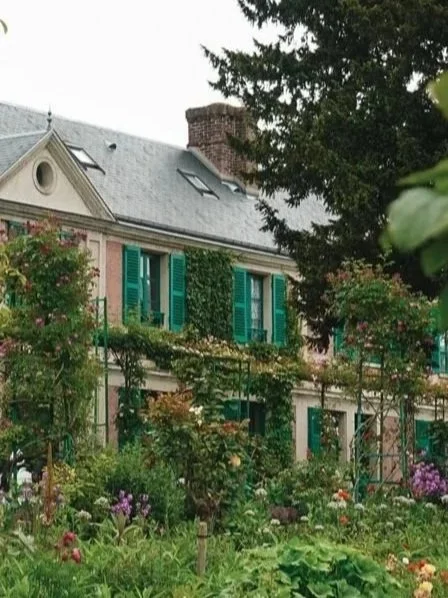
Giverny (Monet’s Gardens), Normandy
Giverny is a small village in Normandy, about an hour from Paris, and is best known as the home of Claude Monet.
This is where he created many of his most famous paintings, including the water lilies. The gardens were designed by Monet himself, which is why everything feels intentional, from the colour combinations to the reflections across the water.
The Japanese bridge and lily pond are the most recognisable parts, and they look exactly like the paintings, which is what makes it worth seeing in person.
The house is also open to walk through, with rooms kept in a similar style to when Monet lived there.
I visited Giverny as part of a day tour from Paris that also included Versailles, and it ended up being one of my favourite days of the trip. Both locations are slightly out of the way, so doing them together makes it much easier to plan.
Best Giverny tours from Paris
Giverny is easiest to visit as a day trip from Paris, especially if you want to combine it with Versailles or avoid organising transport yourself.
View day trips from Paris combining Giverny and Versailles
See half-day Giverny tours from Paris (Monet’s gardens)
Why visit Giverny
- Direct connection to Monet and Impressionist art
- One of the most recognisable gardens in the world
- Easy day trip from Paris or part of a combined Versailles itinerary
- Works well within a broader Normandy route including Rouen, Honfleur, and Bayeux
How to get to Giverny
Giverny is located around 1 hour from Paris. The most common route is to take a train to Vernon, followed by a short bus, bike ride, or taxi to the village.
Many visitors choose to join a guided tour from Paris, especially if combining Giverny with Versailles or other nearby destinations.
Best time to visit Giverny
Giverny is best visited between spring and early autumn, when the gardens are in full bloom.
Late spring and early summer are particularly popular, while autumn offers fewer crowds and a different seasonal look. The gardens are typically closed in winter.
Le Mans, Loire Valley (Northwest France)
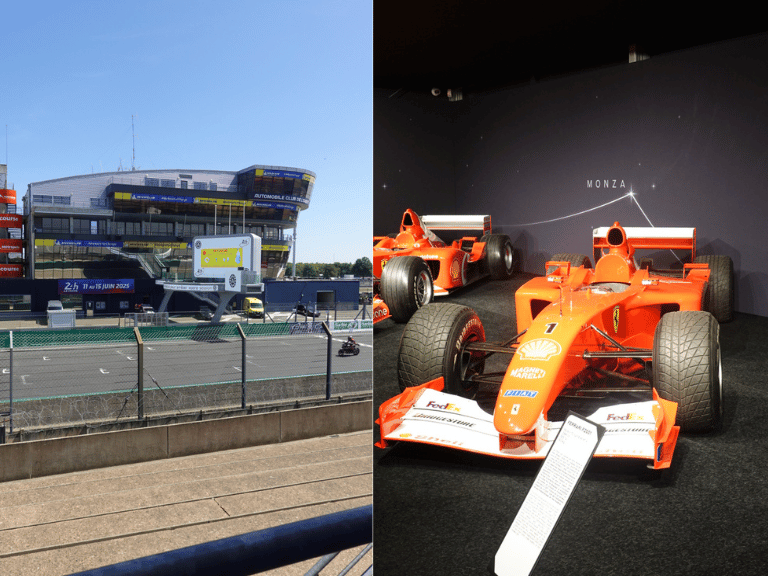
Le Mans sits in the Loire Valley region, about an hour from Paris by train, and is best known for the 24 Hours of Le Mans, one of the most famous endurance races in the world. But beyond that, it has one of the most underrated old towns in France.
The historic centre, Cité Plantagenêt, is a fully preserved medieval quarter with cobbled streets, timber-framed houses, and Roman walls that date back to the 3rd century.
But what really makes Le Mans stand out is the race track. Even outside of race week, visiting the circuit completely changes how you see the town. The scale of it is hard to understand until you’re actually there.
I went out to the track and it ended up being one of the most memorable parts of the trip. It’s huge, and seeing sections of the circuit in person gives you a much better sense of how intense the race actually is.
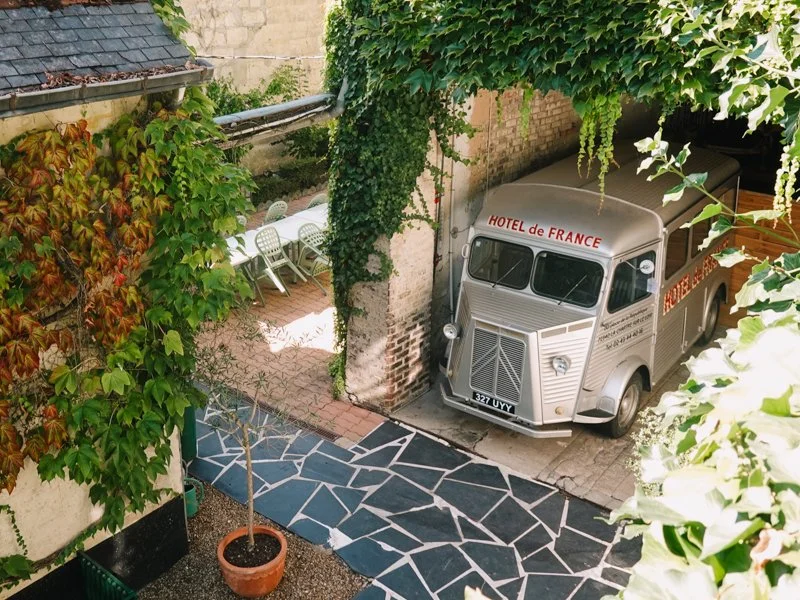
Around the Hôtel de France area, the streets feel more local and relaxed, with cafés and a slower pace compared to larger cities.
I stayed at the Hôtel de France and it was genuinely amazing. If you’re into motorsport, it’s such a cool place to stay, with old racing photos, memorabilia, and that strong connection to the race still running through the hotel.
Le Mans race track and Loire Valley highlights
If you’re visiting Le Mans, the race track and museum are a must, even outside of race season.
Visit the Le Mans 24 Hours Museum and explore the circuit
Get tickets to Château de Chambord (Loire Valley)
Why visit Le Mans
- Well-preserved medieval old town (Cité Plantagenêt)
- Direct connection to the 24 Hours of Le Mans race and circuit
- Unique opportunity to visit the race track and museum year-round
- Bucket list stay at Hôtel de France for motorsport fans
- Less crowded than other Loire Valley destinations
How to get to Le Mans
Le Mans is located around 1 hour from Paris by train, with direct TGV services making it one of the easiest day trips from the capital.
You can check train times and book tickets here: Search and book train tickets in France It’s also well positioned for road trips between the Loire Valley, Normandy, and western France, making it an easy stop within a wider France itinerary.
Best time to visit Le Mans
Le Mans can be visited year-round, but the most popular time is June, when the 24 Hours of Le Mans race takes place.
Outside of race season, spring and early autumn are ideal for exploring both the old town and the race track with fewer crowds and milder weather.
Annecy, French Alps (Near the Swiss Border)
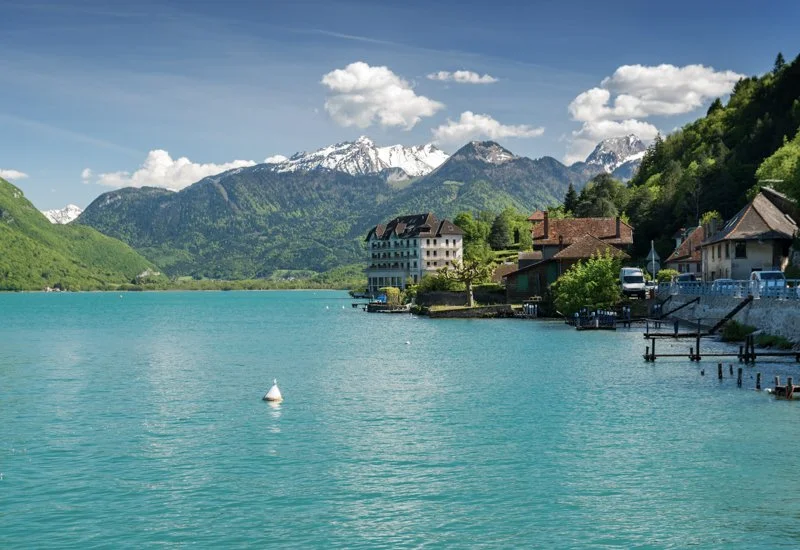
Annecy sits in the French Alps, close to the Swiss border, and is often considered one of the prettiest towns in France. It combines canals, a lake, and mountain views all in one place, which is what makes it stand out.
The old town, Vieille Ville, is built around a network of canals that run into Lake Annecy, known for its clear, bright blue water. The streets are lined with pastel buildings, flower boxes, small bridges, and cafés that sit right along the water.
Historically, Annecy was part of the Duchy of Savoy before becoming French, which is why it feels slightly different to other parts of the country in both architecture and layout.
It’s easy to explore on your own, but doing a walking tour gives you more context around the canals, old town, and how the area developed.
Best things to do in Annecy
Annecy is best explored on foot, but tours and experiences help you get more out of the old town and surrounding lake.
Beyond just walking the old town, there’s a lot to do here:
- Walk or cycle around Lake Annecy
- Take a boat cruise across the lake
- Swim in designated areas during summer
- Visit Palais de l’Isle, the small island building in the canals
- Head up to Château d’Annecy for views over the town
- Explore nearby alpine towns and hiking areas
If you’re staying overnight, Auberge de Jeunesse HI Annecy is a good budget-friendly option in a great location.
Why visit Annecy
- One of the prettiest canal towns in France
- Clear lake with a mountain backdrop
- Strong mix of scenery, food, and outdoor activities
- Easy to explore on foot or by bike
How to get to Annecy
Annecy is around 4 hours from Paris by train, or about 1.5 hours from Geneva, making it an easy addition to a France or Switzerland itinerary.
Best time to visit Annecy
Annecy is best visited from late spring to early autumn, when the lake is at its best and outdoor activities are in full swing.
Summer is the most popular time to visit, while spring and early autumn offer fewer crowds with similar scenery.
Gordes, Provence (Luberon Hilltop Village)
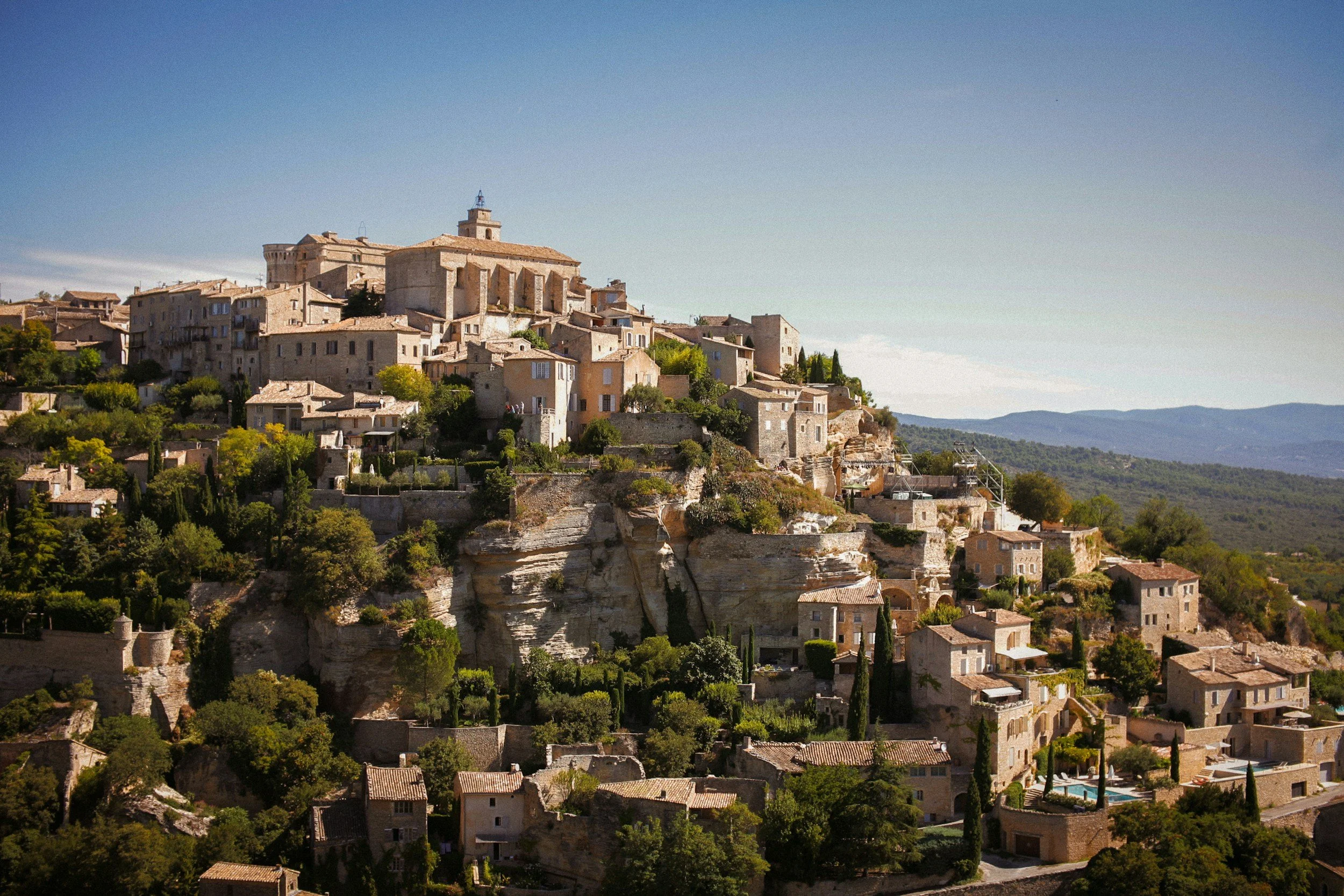
Gordes sits high on a hill in the Luberon region of Provence and is widely considered one of the most beautiful villages in France. Built from pale stone and set against the landscape, the entire village blends into the cliffside, which is what makes it stand out the moment you arrive.
The best view of Gordes is actually from the outside looking in. As you approach, you get that full postcard view of the village stacked into the hillside, with the Luberon valley stretching out behind it.
Inside the village, the streets are narrow, winding, and built from the same stone, with small shops, cafés, and viewpoints opening up as you walk through. It feels less polished than places like Annecy, but that’s part of the appeal.
Gordes has also attracted artists for years, drawn to the light, landscape, and setting, which adds to the overall feel of the place.
Top experiences in Gordes and the Luberon
Gordes is best explored as part of a wider Provence itinerary, especially if you want to experience local food, scenery, and smaller villages.
View Provence food and olive oil tasting experiences
See carriage rides through the Luberon countryside
Why visit Gordes
- One of the most beautiful hilltop villages in France
- Iconic stone buildings built directly into the hillside
- Incredible views over the Luberon valley
- Strong connection to art, culture, and Provence lifestyle
How to get to Gordes
Gordes is located in Provence, around 40 minutes from Avignon and about 1 hour from Marseille. The easiest way to visit is by car, as public transport options are limited.
It’s typically included as part of a Provence road trip through the Luberon villages.
Best time to visit Gordes
Gordes is best visited from late spring to early autumn, when the weather is warm and the surrounding countryside is at its best.
July is peak season, especially with lavender fields in bloom nearby, while May, June, and September offer fewer crowds with similar scenery.
Viry-Châtillon (Le Nymphée), Near Paris
This is a very different kind of stop compared to the others in this guide. Viry-Châtillon is a town just outside Paris in the Essonne region, and while it’s not a typical destination, it’s home to one of the more unusual hidden spots in France.
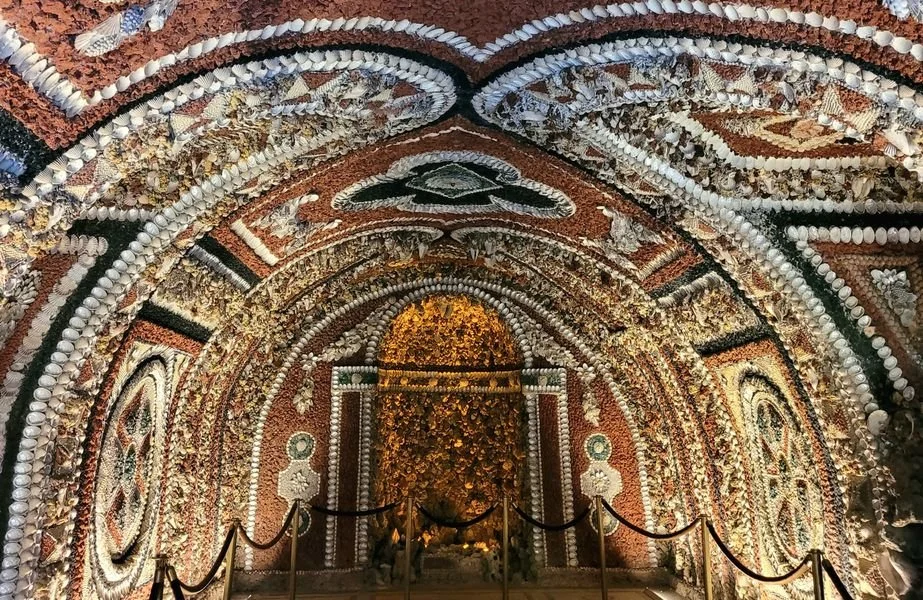
Le Nymphée de Viry is a small shell grotto built with intricate patterns made entirely from shells and stones. It’s tucked away and not widely known, which is part of what makes it interesting.
Compared to the other places in this guide, this is less about scenery or historic centres and more about discovering something unexpected. It’s quiet, different, and works best as a short stop if you’re already based in Paris or exploring the surrounding area.
Why visit Viry-Châtillon
- Unique shell grotto with detailed handcrafted designs
- Lesser-known spot near Paris
- Quick and easy stop outside the city
- Adds something different to a France itinerary
How to get to Viry-Châtillon
Viry-Châtillon is located around 30–40 minutes from central Paris. It can be reached by train or car, making it an easy half-day trip from the city.
Best time to visit Viry-Châtillon
This is a year-round destination, but it’s best visited as part of a wider Paris itinerary or combined with other nearby stops.
Map of the Cutest Places in France
To help you plan your trip, I’ve mapped out all of the cutest places in France included in this guide. This gives you a clear idea of where everything is located and how you can group destinations together into a realistic itinerary.
France is larger than it looks on a map, and these places are spread across different regions, including Alsace, Normandy, the Loire Valley, the French Riviera, the Alps, and Provence. Seeing them visually makes it much easier to plan your route and avoid unnecessary backtracking.
This map makes it much easier to plan a route between the cutest places in France without wasting time backtracking.
2-week France itinerary for the cutest places in France (including Paris)
If you’re trying to visit multiple cute places in France in one trip, the easiest way to do it is by following a rough route rather than jumping between regions.
This 2-week itinerary starts in Paris, includes a day trip to Giverny, then moves through Normandy, the Loire Valley, Alsace, the Alps, Provence, and finishes on the French Riviera.
It’s a fairly fast-paced route, but it gives you a really good mix of towns, scenery, and different parts of France. If you prefer a slower trip, you can use this as a starting point and focus on fewer regions.
Plan your 2-week France itinerary
Start in Paris and allow two full days to settle in, see the main sights, and enjoy the city properly.
🏨 Browse Paris hotels | 🎟️ Browse Paris activitiesTake a day trip from Paris to Monet’s gardens, then return to Paris for the night.
🎟️ Browse Giverny day tripsUse Bayeux as your base for D-Day beaches, Honfleur, and Mont-Saint-Michel.
🏨 Book stays in Bayeux | 🎟️ Browse Bayeux toursStop in Le Mans for the old town, race track, and museum.
🏨 Book Hôtel de France | 🎟️ Browse activitiesBreak up the journey with a quieter Burgundy-style stop.
🏨 Book stays in Auxerre | 🎟️ Browse activitiesBase yourself in Colmar to explore Alsace including Riquewihr and Strasbourg.
🏨 Book stays in Colmar | 🎟️ Browse activitiesExplore canals, lake views, and alpine scenery.
🏨 Book stays in Annecy | 🎟️ Browse activitiesExplore Gordes and the Luberon villages.
🏨 Book stays in Provence | 🎟️ Browse activitiesFinish in Saint-Tropez and along the Côte d’Azur.
🏨 Book stays near Saint-Tropez | 🎟️ Browse activitiesWhat to know before visiting small towns in France
Smaller towns and villages in France are some of the best places to visit, but they don’t work the same way as bigger cities. A few things that will make your trip easier:
Markets are worth planning around
Most towns have weekly markets with local produce and goods, but they only run on certain days. If you time your visit right, it completely changes the experience.
You’ll usually park outside the old town
Historic centres are often pedestrian-only, so expect to park nearby and walk in. Look for signed public car parks rather than driving into the centre.
Don’t rely on English everywhere
In bigger destinations you’ll be fine, but smaller towns can be hit or miss. Having a translation app or a few basic phrases helps.
Card is common, but not guaranteed
Most places take card, but smaller cafés, bakeries, and markets sometimes don’t. It’s worth carrying some cash.
Toilets aren’t always straightforward
Public toilets exist, but aren’t always easy to find or ideal to use. It’s usually easier to stop at a café and use theirs.
Meals are slower and more relaxed
You won’t be rushed out. You’ll normally need to ask for the bill, and service works differently to what you might be used to.
Plan your trip to France
Plan your trip to France
If you’re putting together a France itinerary, these are the exact tools I used to book accommodation, transport, and activities across the country.
Find and compare hotels across France
Compare rental cars for exploring France
Check train times and book tickets across France
Get an eSIM for data while travelling in France
Browse tours and experiences across France

Everything I use when planning a trip, all in one place.
This page may contain affiliate links. I may earn a small commission at no extra cost to you. Learn more →
