Are Australian Animals Dangerous? The Truth (From an Aussie)
Staying Safe in Australia
Despite what you’ve probably heard, Australia is not a place where everything is waiting to attack you the second you step off the plane.
You are not dodging funnel-webs, crocodiles, and brown snakes every five seconds. Most of these animals live in very specific parts of the country, and unless you go looking for them, you’re unlikely to come anywhere near them.
The reality is, millions of people live here, travel here, swim, hike, camp, and go about everyday life without any issues.
The only thing that might genuinely come for you unprovoked? Magpies. And even then, it’s seasonal.
These birds swoop during spring and early summer when they’re protecting their nests, and it’s the only time you’ll see otherwise tough, self-respecting Australians turn into slightly paranoid zip-tie-helmet-wearing lunatics.
It’s basically an Australian rite of passage to get swooped at least once growing up. Dramatic at the time, yes. Actually life-threatening? No.
Like most things in Australia, it comes down to awareness. Follow signs, listen to locals, and don’t take risks in places you’re unsure about.
Below are the main things to know. Keep them in mind, and you’ll be completely fine.
Important Safety Tips In Australia
Know 000
Australia’s emergency number is 000. Save it, know it, and use it if you need urgent help.
In the bush and gardens
Stick to tracks, avoid long grass, and wear proper shoes. Don’t put your hands or feet anywhere you can’t clearly see, including holes, logs, rocks, or dense garden areas.
In the water
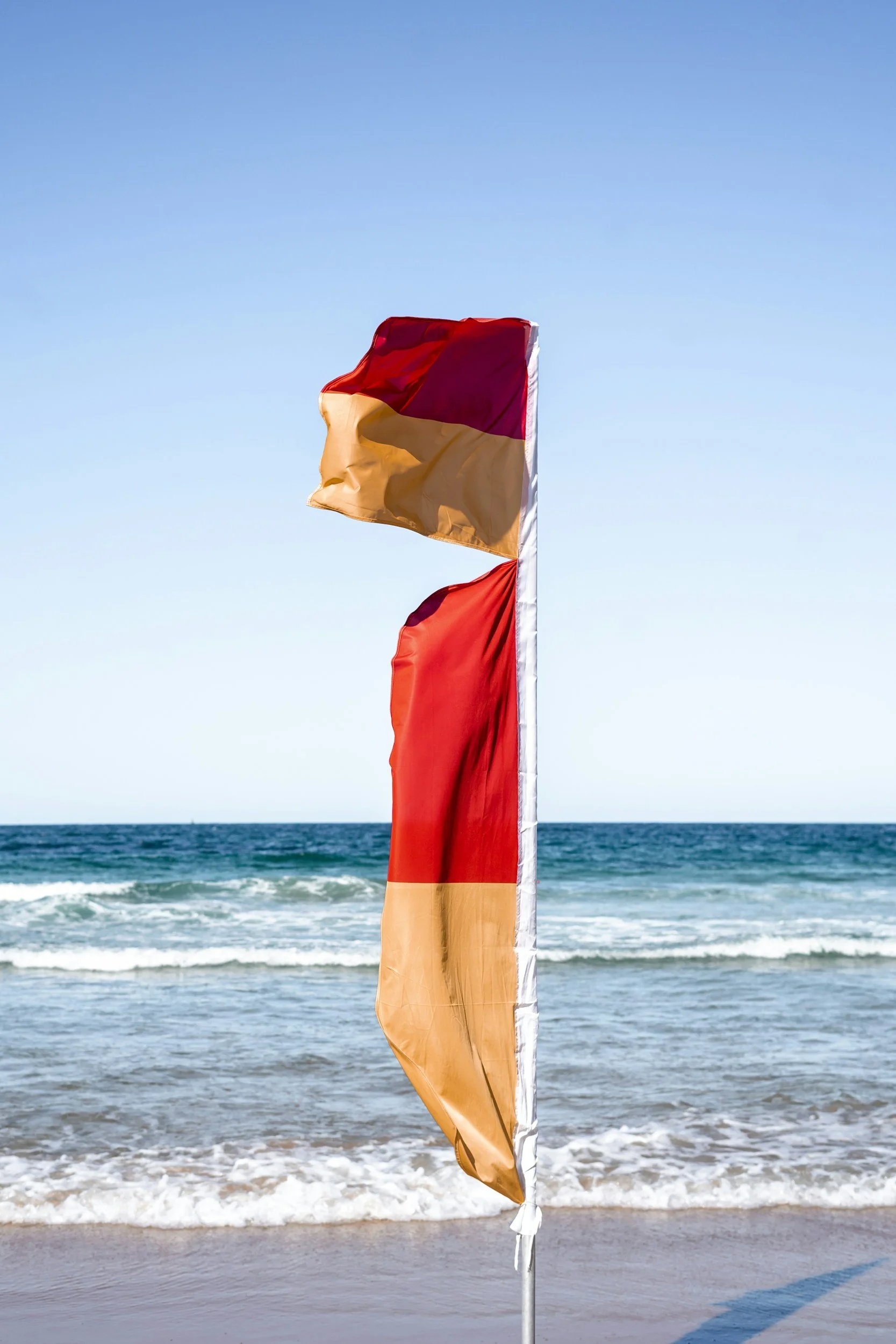
Swim between the red and yellow flags at patrolled beaches. Avoid swimming at dawn, dusk, or in murky water, and stay out if there are warnings or no lifeguards present.
Follow signs and local advice
Warning signs exist for a reason. Listen to locals, lifeguards, and rangers, and if you’re unsure, don’t take the risk.
Should You Be Scared To Visit Australia?
No. Australia is not a place where you need to spend your whole trip on edge. You’re not going to be constantly avoiding animals or scanning the ground in fear.
Most of what people hear overseas is exaggerated. The reality is that these risks are usually regional, uncommon, or only become a problem when people ignore basic advice.
If you use common sense, follow signs, and respect the environment you’re in, you’ll have an incredible trip without any issues.
Shark Safety in Australia
Sharks are one of those things people worry about in Australia, but realistically, it’s about awareness, not fear.
They’re found in oceans all around the country, from Sydney to Western Australia, but incidents are rare and usually linked to specific conditions.
If you’re swimming at a patrolled beach, especially between the flags, you’re in the safest possible spot. Lifeguards monitor conditions and close beaches when needed.
Most issues happen when people swim outside patrolled areas, at dawn or dusk, or in murky water where visibility is low.
Avoid swimming near river mouths, where bait fish are present, or where people are fishing. These are the kinds of conditions that can attract sharks.
Swimming in groups is safer than swimming alone, and it’s worth skipping the water entirely if conditions don’t feel right.
If you do see a shark, stay calm, keep it in sight, and move steadily out of the water. Avoid splashing or panicking.
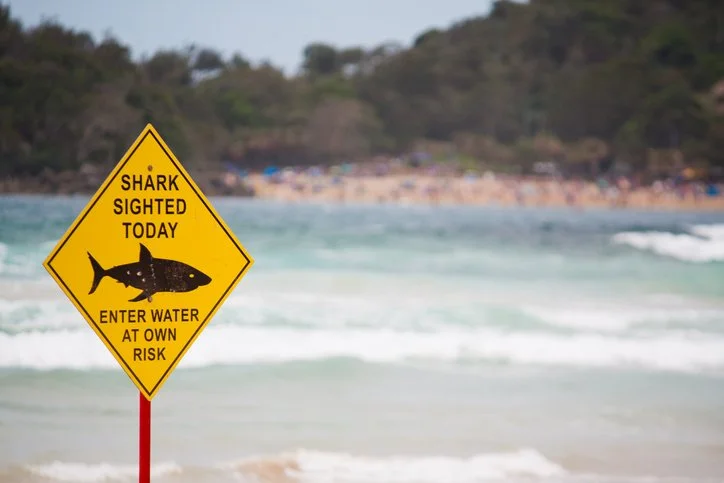
Sharks in Australia: Breeds and Locations
Unlike crocodiles, sharks aren’t territorial in the same way, and they don’t target people. Most encounters are cases of curiosity or mistaken identity.
Species like great whites, bull sharks, and tiger sharks exist in Australian waters, but again, encounters are uncommon.
Technology like shark nets, drones, and tracking programs are used at many popular beaches to help manage risk.
If you follow local advice, swim in the right places, and pay attention to conditions, the risk is very low.
It’s not about fear, just understanding where you are and making smart choices.
Sharks in Australia: What to Know
| Shark | Size & Look | Where Found | Water Type | How Common | Danger Level | What to Do |
|---|---|---|---|---|---|---|
| Great white shark | Large, grey with white underside, powerful build | Southern Australia (NSW, VIC, SA, WA) | Coastal and offshore waters | Uncommon | Very High | Avoid swimming at dawn/dusk and outside patrolled areas. Leave the water calmly if spotted. |
| Bull shark | Stocky, grey, blunt snout | Eastern Australia, including rivers (QLD, NSW) | Freshwater and saltwater | Common in some areas | Very High | Avoid river mouths and murky water. Do not swim where fishing or bait fish are present. |
| Tiger shark | Large, dark stripes (faint in adults), bulky | Northern Australia (QLD, NT, WA) | Tropical coastal waters | Uncommon | High | Avoid swimming in areas with poor visibility or near reefs at dawn/dusk. |
| Bronze whaler shark | Slim, bronze-grey body | Southern Australia, near beaches | Coastal waters | Common | Moderate | Stay in groups and swim at patrolled beaches. |
| Hammerhead sharks | Distinct hammer-shaped head, grey | Warmer Australian waters | Coastal and offshore | Uncommon | Low–Moderate | Rarely dangerous. Exit the water calmly if encountered. |
Good to know: Sharks are found in oceans all around Australia, but incidents are rare. Most occur when people swim outside patrolled areas, at dawn or dusk, or in murky water. This isn’t about fear — just being aware of conditions, following signage, and making smart choices about when and where you swim.
Croc Safety in Northern Queensland (Be Croc-Wise)
Australian Crocodiles are one of the few animals in Australia you genuinely need to take seriously, but again, it comes down to awareness rather than fear.
They’re only found in northern Australia, mainly in Far North Queensland, the Northern Territory, and parts of northern Western Australia. You’re not dealing with them in Sydney, Melbourne, or most of the country.
If you’re travelling in Northern Queensland, you’ll hear the phrase “be croc-wise” a lot, and it’s exactly what it sounds like. Pay attention to where you are and follow the signs.
Never swim in rivers, estuaries, or unpatrolled beaches where crocodiles may be present. If there are warning signs, take them seriously. They’re there for a reason.
Keep well back from the water’s edge, especially at dawn and dusk, and don’t sit or stand near riverbanks. Crocodiles can move quickly and quietly.
It’s also important not to feed wildlife or leave food scraps around campsites, as this can attract animals to areas they wouldn’t normally be.
Australian Crocodiles Are Not Alligators or Small Crocs
If you’ve been somewhere like Florida and seen alligators, it’s important to understand that Australian crocodiles are very different.
Saltwater crocodiles here are much larger, more territorial, and more aggressive. They’re built for ambush, can move quickly in and out of the water, and are capable of what’s known as a “death roll” when they catch prey.
If you’re in croc country, assume any river, estuary, or unpatrolled beach could have crocodiles. Follow signage, listen to local advice, and if you’re not sure, don’t swim.
It’s not about fear, just understanding the environment and respecting it.
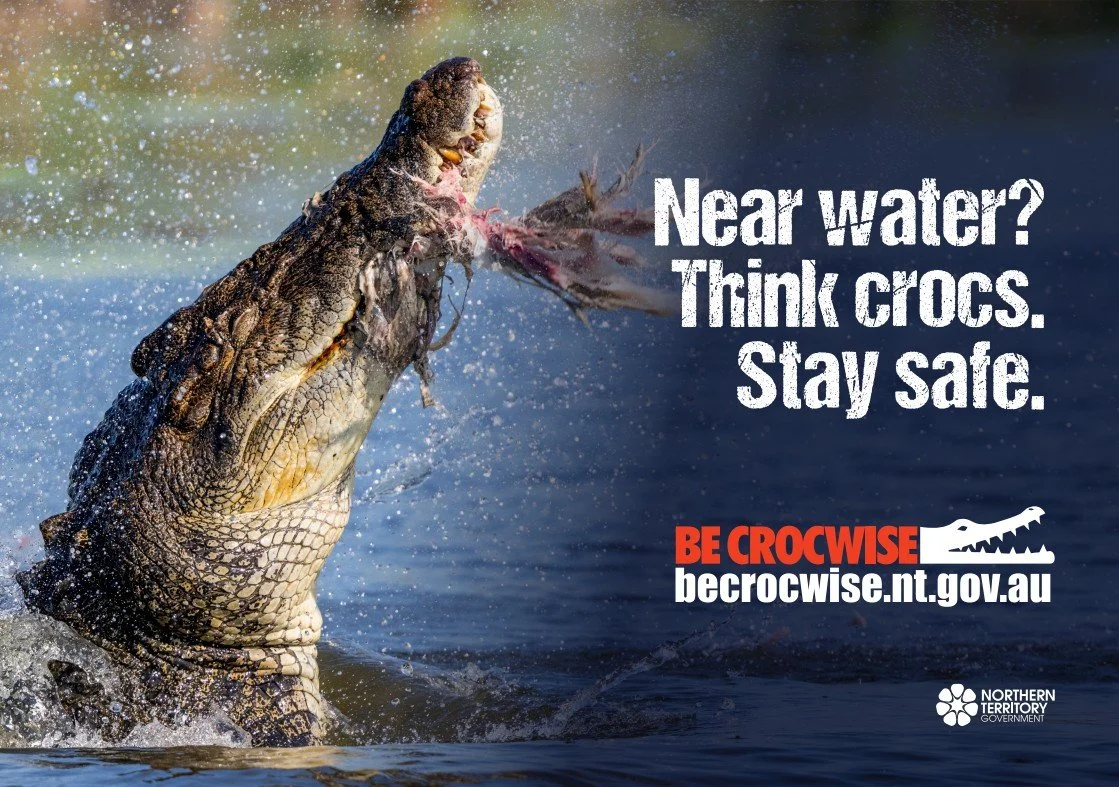
How to be croc-wise
- Always obey crocodile warning signs
- Never swim where crocodiles may be present, even if you don’t see any
- Swim only at patrolled beaches or clearly designated safe areas
- Stay well back from the water’s edge, especially around rivers and estuaries
- Look out for slide marks on riverbanks and avoid those areas
- Never feed crocodiles or leave food scraps near water
- When fishing, stand back from the edge and don’t clean fish near the water
- Camp at least 50m from water and above the high-water mark
Good to know
- Crocodiles are only found in northern Australia
- They can move quickly and are often hard to see in the water
- Most incidents happen when people ignore signs or take risks
- If you fall into the water, get out as quickly and calmly as possible
- You can download the QWildlife app to report sightings and check activity in the area
- If in doubt, don’t swim
Crocodiles in Australia: What to Know
| Crocodile | Size & Look | Where Found | Water Type | How Common | Danger Level | What to Do |
|---|---|---|---|---|---|---|
| Saltwater crocodile (Saltie) | Massive, thick body, dark grey/green, broad snout | Northern Australia (QLD, NT, WA) | Rivers, estuaries, beaches, coastal waters | Common in croc country | Extreme | Do not enter the water. Stay well back from edges and follow all warning signs. |
| Freshwater crocodile (Freshie) | Smaller, slimmer, lighter brown, narrow snout | Northern Australia (inland rivers, NT & WA) | Freshwater rivers and billabongs | Common | Low–Moderate | Generally not aggressive, but do not approach or swim near them. |
Good to know: Crocodiles are only found in northern Australia, but where they do exist, they are a real risk. Saltwater crocodiles are large, territorial, and capable of ambush attacks in both fresh and saltwater. This is not like seeing alligators overseas. If you’re in croc country, assume any waterway could have crocodiles and follow local advice at all times.
Spider Safety in Australia
I’m actually quite irrationally scared of spiders, and I live in Australia. I’m based near the Blue Mountains, so this isn’t hypothetical, it’s everyday life here.
In over 30 years, I’ve never seen a funnel-web or a mouse spider in real life. I have had redbacks in the backyard, but they’re small and not aggressive. You either leave them alone or carefully move them on. It’s not something that’s constantly happening or something you need to stress about.
I’m also not putting any spider photos here (haha), so if you do want a proper reference, the Australian Museum spider guide is a really good resource.
The best approach is really simple. Don’t put your hands into gardens, bushland, or anywhere you can’t see properly. Don’t reach into holes or under rocks, and wear shoes or boots when you’re outside.
You don’t need to be on edge, just a bit switched on. That’s how Australians live with it day to day.
The best approach is simple
- Don’t put your hands where you can’t see (gardens, rocks, wood piles)
- Wear shoes when outside, especially in bushland or around gardens
- Shake out shoes, towels, or clothing left outside
- Be cautious around sheds, outdoor furniture, and quiet corners
- If you see a spider, leave it alone and don’t try to handle it
- Most spiders are harmless, just use common sense
If you are bitten
- Stay calm and monitor symptoms
- For funnel-web bites, treat as an emergency and call 000
- For redback bites, seek medical attention if pain or symptoms develop
- Apply a cold pack for pain relief (not a pressure bandage unless advised)
- Do not try to identify the spider if it’s unsafe to do so
Dangerous Spider Breeds and Types Table
| Spider | Colour & Look | Body Size | Where Found | How Common | Danger Level | What to Do If You Are Bitten |
|---|---|---|---|---|---|---|
| Funnel-web spiders | Black, shiny, bulky body, thick legs, large fangs | 1.5–5 cm body | Eastern Australia, mainly NSW (gardens, burrows, under rocks) | Rare | Very High | Medical emergency. Apply pressure bandage and go to hospital immediately. |
| Redback spider | Small, black with red stripe or spot on back | ~1 cm body | Nationwide, around homes, sheds, outdoor furniture | Common | Moderate–High | Painful bite. Seek medical attention. Go to hospital if symptoms are severe. |
| Mouse spiders | Black or dark, sometimes red head, thick body | 1–3 cm body | Across Australia (gardens, burrows, bushland) | Rare | Moderate | Treat as serious. Seek medical attention to be safe. |
| White-tailed spiders | Grey to dark with a white tip on abdomen, slimmer body | 1–2 cm body | Nationwide, often indoors or in homes | Common | Low | Clean bite area. Monitor symptoms. Medical help if concerned. |
| Trapdoor spiders | Dark brown/black, hairy, stocky, similar to funnel-web but duller | 2–4 cm body | Burrows in soil, bushland, gardens across Australia | Uncommon | Low | Not dangerous. Leave alone and avoid handling. |
Good to know: Even the more dangerous species are rarely encountered. Most people will only ever see harmless spiders or the occasional redback around homes.
Dangerous Snakes in Australia Guide
I’ve lived in Australia my whole life, and I have family all across the country. I don’t personally know anyone who has ever been bitten by a snake.
The only instance I’ve heard of was a friend of a friend visiting from overseas who went bush walking off track and ignored signage. That’s almost always how these things happen.
Snakes are part of the environment here, but they’re not aggressive and they don’t go looking for people. Most will move away long before you even realise they’re there.
For travellers, the main snakes to be aware of are brown snakes, red-bellied black snakes, tiger snakes, taipans, and death adders. These are the ones that require urgent medical attention if a bite does occur.
Snakes are also much harder to identify than spiders, so the rule is simple. If you are bitten, treat it as an emergency and get medical help immediately. Don’t try to work out what it was.
The best approach is simple
- Stay on marked trails and follow signage
- Wear enclosed shoes or boots when walking outdoors
- Avoid walking through long grass or bushland where you can’t see the ground
- Watch where you step, especially near rocks, logs, or water
- If you see a snake, keep your distance and move away calmly
- Never try to approach, touch, or move a snake
If you are bitten
- Call 000 immediately
- Keep as still as possible
- Apply a pressure bandage if you know how
- Do not wash the bite area
- Do not try to identify the snake
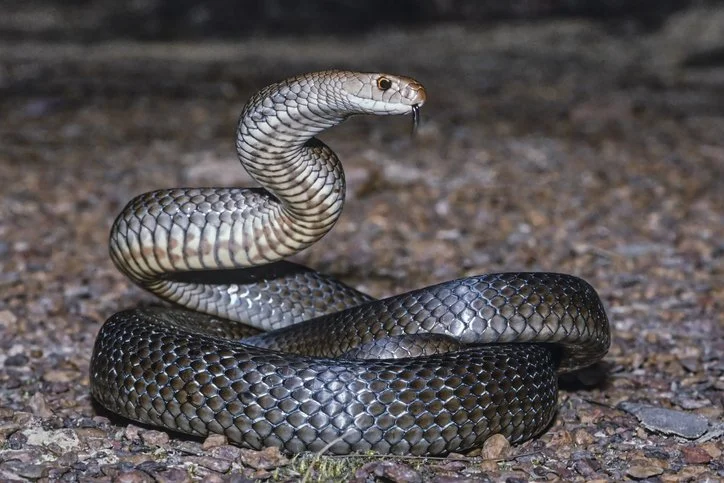
Eastern Brown Snake
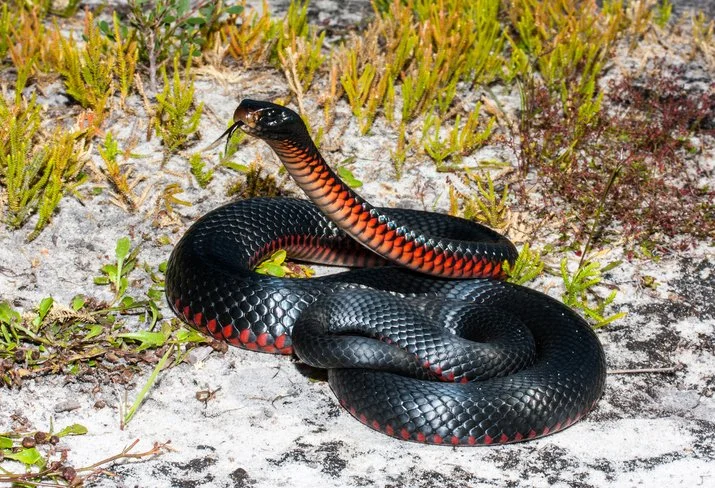
Red Bellied Black Snake
Dangerous Snakes Breeds and Types Table
| Snake | Colour & Look | Body Size | Where Found | How Common | Danger Level | What to Do If You Are Bitten |
|---|---|---|---|---|---|---|
| Eastern Brown Snake | Usually tan to dark brown, slender body, small head | 1.2–2 m | Eastern and central Australia, including farms, grassland, bush edges and some suburban areas | Common in the east | Very High | Medical emergency. Call 000, keep still, apply a pressure bandage, and go to hospital immediately. |
| Red-bellied Black Snake | Black upper body with red or pink sides and belly, glossy look | 1.5–2 m | East coast of Australia, often near creeks, wetlands and damp bushland | Quite common on the east coast | High | Medical emergency. Call 000, keep still, apply a pressure bandage, and go to hospital immediately. |
| Tiger Snake | Olive, brown, grey or almost black, sometimes banded | 1–1.5 m | Southern Australia, especially wetlands, coastal areas and Tasmania | Uncommon to fairly common depending on region | Very High | Medical emergency. Call 000, keep still, apply a pressure bandage, and go to hospital immediately. |
| Coastal Taipan | Light to dark brown, slim but long, alert-looking head | 2–2.5 m | Northern and eastern coastal regions, especially Queensland | Uncommon | Very High | Medical emergency. Call 000, keep still, apply a pressure bandage, and go to hospital immediately. |
| Death Adder | Short, thick body with bands or blotches, triangular head, very well camouflaged | 40–100 cm | Woodland, forest and scrub across parts of Australia | Uncommon | Very High | Medical emergency. Call 000, keep still, apply a pressure bandage, and go to hospital immediately. |
| Mulga Snake | Brown to reddish-brown, heavy-bodied, broad head | 1.5–3 m | Inland, northern and western Australia | Uncommon for most tourists | High | Medical emergency. Call 000, keep still, apply a pressure bandage, and go to hospital immediately. |
| Inland Taipan | Brown to olive, slender, changes a bit seasonally | 1.8–2.5 m | Remote inland areas of Queensland, SA and NT | Very rare | Very High | Medical emergency. Call 000, keep still, apply a pressure bandage, and go to hospital immediately. |
Good to know: For travellers, the main snakes to be aware of are brown snakes, red-bellied black snakes, tiger snakes, taipans, and death adders. If you are bitten by any snake in Australia, treat it as an emergency. You do not need to identify it first. Snakes are also much harder to identify than spiders, so my advice is simple - always seek medical attention.
Dangerous Animals in Australia (Full Guide)
Australia has a reputation for dangerous animals, and while some of that is true, the reality is much more manageable than people expect.
This is a full list of wildlife you might come across, but it’s important to keep it in perspective. Most of these animals are location-based, avoid people, and are rarely encountered if you follow basic safety advice.
The key is not to stress, just to be aware. Stay on marked paths, follow signage, wear proper shoes outdoors, and don’t put your hands where you can’t see.
If you’re near water, swim between the flags and pay attention to local warnings. In northern Australia, be croc-wise, especially around rivers, estuaries, and beaches.
Australia is a very safe place to travel. Most issues happen when people ignore advice or take unnecessary risks. Do the basics right, and you’ll be completely fine.
| Animal | Scientific Name | Where Found | Danger Level | Main Risk | How to Stay Safe |
|---|---|---|---|---|---|
| Female Blue Mountains Funnel-web Spider | Hadronyche versuta | Blue Mountains, NSW | High | Venomous bite | Do not put hands into holes, under rocks, or into damp garden areas without checking first. |
| Australian Funnel-web Spiders | Atrax / Hadronyche spp. | Eastern Australia, especially NSW and QLD | High | Venomous bite | Shake out shoes, avoid reaching into hidden spaces, and seek urgent help if bitten. |
| Australian Magpie | Gymnorhina tibicen | Nationwide | Moderate | Swooping during nesting season | Avoid nesting areas, wear sunglasses, and keep moving calmly rather than stopping. |
| Australian Paralysis Tick | Ixodes holocyclus | East coast, especially NSW and QLD | High | Tick paralysis, allergic reactions | Use repellent, wear long clothing in bushland, and check your body after walks. |
| Bare-nosed Wombat | Vombatus ursinus | Eastern and southeastern Australia, Tasmania | Low to Moderate | Bites, scratches, road hazard | Do not approach or feed. Be especially careful driving at dawn and dusk. |
| Blue Ant | Diamma bicolor | Eastern Australia | Moderate | Painful sting | Avoid walking barefoot in grassy or sandy areas where they may be active. |
| Blue-bellied Black Snake | Pseudechis guttatus | Eastern Australia | High | Venomous bite | Watch where you step in bushland and never try to handle snakes. |
| Bluebottle | Physalia spp. | Australian beaches, especially east coast | Moderate | Painful stings | Check beach warnings and avoid swimming when lots are washed up or visible in the water. |
| Blue-lined Octopus | Hapalochlaena fasciata | Tide pools, reefs, rocky coastlines | Very High | Highly venomous bite | Never touch small octopus-like creatures, even if they look calm or harmless. |
| Box Jellyfish | Chironex fleckeri | Northern tropical waters | Very High | Severe sting, potentially fatal | Swim only at patrolled beaches, wear stinger suits, and follow seasonal warnings. |
| Bull Ants | Myrmecia spp. | Nationwide | Moderate | Painful sting, allergic reactions | Watch where you stand in bushland and avoid disturbing nests. |
| Bull Shark | Carcharhinus leucas | Coastal waters, estuaries, rivers | High | Shark attack risk | Swim between the flags, avoid murky water, and do not swim at dawn or dusk. |
| Cane Toad | Rhinella marina | Queensland, NT, northern NSW, northern WA | Low to Moderate | Toxic secretion, mainly risk to pets | Do not touch with bare hands and keep pets away. |
| Coastal Taipan | Oxyuranus scutellatus | Northern and eastern coastal regions | Very High | Highly venomous bite | Stay on marked tracks and seek emergency help immediately if bitten. |
| Collett’s Snake | Pseudechis colletti | Inland Queensland | High | Venomous bite | Avoid long grass and never attempt to move or touch snakes. |
| Common Death Adder | Acanthophis antarcticus | Woodland, forest, coastal heath | Very High | Venomous bite, excellent camouflage | Wear enclosed shoes and watch the ground carefully in leaf litter. |
| Common Lionfish | Pterois volitans | Some northern waters and reefs | Moderate | Venomous spines | Do not touch reef fish and wear reef-safe footwear where appropriate. |
| Copperhead Snake | Austrelaps spp. | Cooler southern regions, wetlands, grasslands | High | Venomous bite | Stay on paths and avoid wet grassy areas without proper footwear. |
| Dingo | Canis familiaris (Dingo) | K’gari, some national parks, remote areas | Moderate | Bites, food aggression | Do not feed dingoes and keep food secured at all times. |
| Dugite | Pseudonaja affinis | Southwestern Australia | High | Venomous bite | Keep distance, avoid scrubby areas without enclosed shoes, and never try to move it. |
| Eastern Brown Snake | Pseudonaja textilis | Eastern and central Australia | Very High | Highly venomous bite | Watch where you step, especially in grass and farmland, and leave snakes alone. |
| Estuarine Crocodile | Crocodylus porosus | Northern Australia | Very High | Attack risk near water | Never swim where warnings are posted and stay well back from riverbanks and estuaries. |
| Giant Centipede | Ethmostigmus rubripes | Eastern Australia | Moderate | Painful bite | Do not place hands under logs, rocks, or bark without checking first. |
| Honey Bee | Apis mellifera | Nationwide | Low to Moderate | Stings, allergic reactions | Stay calm around bees and seek medical help quickly if you have an allergic reaction. |
| Inland Taipan | Oxyuranus microlepidotus | Remote inland Australia | Very High | Highly venomous bite | Rarely encountered, but stay alert in remote inland areas and avoid handling wildlife. |
| Mosquitoes | Various species | Nationwide, especially wetlands and tropical areas | Moderate | Bites, disease risk | Use insect repellent, wear long sleeves, and avoid peak mosquito times where possible. |
| Mulga Snake | Pseudechis australis | Inland and northern Australia | High | Venomous bite | Use caution in arid and remote areas and keep to clear walking tracks. |
| Platypus | Ornithorhynchus anatinus | Eastern Australia, Tasmania | Low to Moderate | Male spur venom | Observe from a distance and never try to handle one. |
| Redback Spider | Latrodectus hasselti | Nationwide | Moderate | Venomous bite | Check outdoor furniture, shoes, sheds, and mailboxes before reaching in. |
| Red-bellied Black Snake | Pseudechis porphyriacus | Eastern Australia | High | Venomous bite | Give snakes space and be cautious near water, creeks, and damp bushland. |
| Reef Stonefish | Synanceia verrucosa | Northern reefs and shallow coastal waters | Very High | Venomous spines | Wear reef shoes and do not step on rocks or reef flats blindly. |
| Smooth Stingray | Dasyatis brevicaudata | Southern coastal waters | Moderate | Barb injury | Shuffle your feet in shallow water and do not approach or corner rays. |
| Smooth Toadfish | Tetractenos glaber | Coastal waters | Low to Moderate | Toxin if handled or eaten incorrectly | Do not handle unfamiliar marine life and follow local fishing advice. |
| Southern Cassowary | Casuarius casuarius | Far North Queensland | High | Kicks and aggression if threatened | Never feed cassowaries and back away slowly if you see one. |
| Sydney Brown Trapdoor Spider | Arbanitis villosus | NSW | Low to Moderate | Bite | Leave burrows and garden debris alone and avoid handling spiders. |
| Sydney Funnel-web Spider | Atrax robustus | Sydney region, NSW | Very High | Highly venomous bite | Shake out shoes and clothing, and get urgent medical help if bitten. |
| Tiger Shark | Galeocerdo cuvier | Australian coastal waters | High | Shark attack risk | Swim at patrolled beaches and avoid swimming alone or in poor conditions. |
| Tiger Snake | Notechis scutatus | Southern Australia, wetlands, coastal regions | Very High | Venomous bite | Stay on tracks, avoid long grass, and never approach snakes. |
| White Shark | Carcharodon carcharias | Southern coastal waters | High | Shark attack risk | Swim between the flags, follow local warnings, and avoid isolated beaches in poor visibility. |
| Yellow-bellied Sea Snake | Pelamis platurus | Tropical and subtropical waters | High | Venomous bite | Do not touch sea snakes, especially if stranded or resting near shore. |

Everything I use when planning a trip, all in one place.
This page may contain affiliate links. I may earn a small commission at no extra cost to you. Learn more →
