JORDAN
Jordan Travel Guide: History, Landscapes and What to Expect
Jordan is one of those places that feels layered in a way that’s hard to explain until you’re there. It’s not just one type of trip. You’ve got ancient cities, desert landscapes, coastline, and religious history, all within a relatively small country that’s easy to move around.
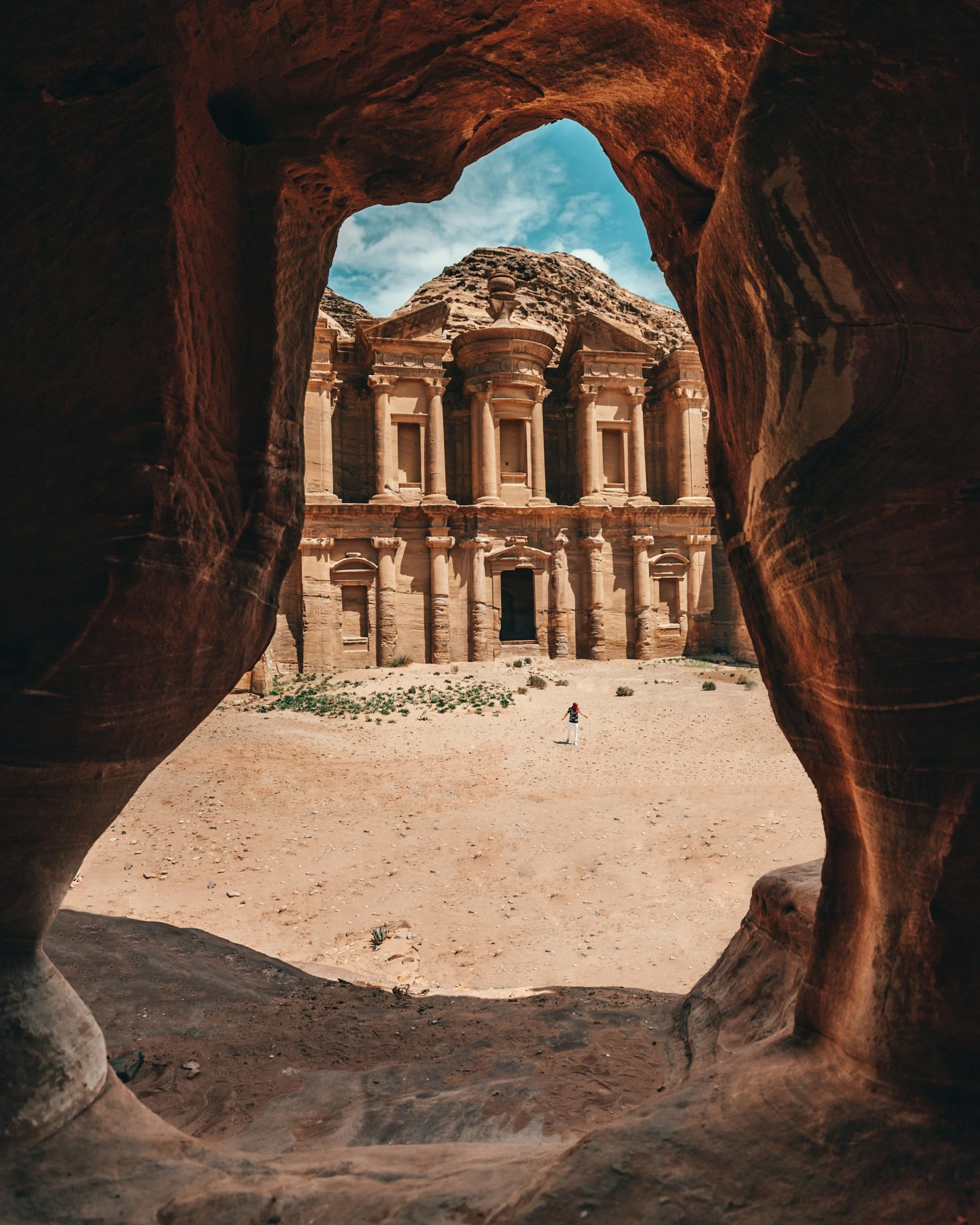
Petra is the standout, and for good reason. Walking through the Siq and seeing the Treasury open up in front of you is one of those moments that actually lives up to the hype. If you’re short on time, a one-day Petra and Wadi Rum tour from Amman is a popular way to see it, but it’s worth staying longer if you can.
Wadi Rum feels completely different. It’s all open desert, red sand, and huge rock formations, and it’s one of those places where the scale really hits you. Experiences like a Wadi Rum jeep tour with an overnight Bedouin camp stay give you a proper feel for the landscape, especially once the crowds leave and it quiets down.
The Dead Sea is another highlight, and it’s exactly what you expect. Floating without trying feels surreal, and it’s an easy add-on from Amman. A full-day Amman city and Dead Sea tour is a good way to combine a few key stops if you’re short on time.
There’s also a deeper cultural and historical side to Jordan that a lot of people don’t expect. Places like Madaba, Mount Nebo, and the Baptism Site add another layer to the trip, especially if you’re interested in religious or historical context. You can explore these on routes like this Madaba, Mount Nebo and Dead Sea day tour.
If you head south to Aqaba, the pace shifts again. It’s more relaxed, with access to the Red Sea, clear water, and coral reefs. Activities like diving in the Red Sea in Aqaba give you a completely different side of the country.
Jordan isn’t overwhelming, but it is diverse. You can move from ancient history to desert to coastline in a short amount of time, and that mix is what makes it feel so complete.
It suits travellers who want a bit of everything. Culture, history, landscapes, and experiences that actually feel different from each other, without needing weeks to see it all.
Jump to: Overview • Weather • Travel Tips • Is Jordan Safe? • Culture & Context • Things to Do • Petra • Wadi Rum • Amman & Dead Sea • Madaba & Mount Nebo • Aqaba & Red Sea
Weather & Best Time to Visit Jordan
Jordan has a mostly dry, desert climate, but the weather can vary more than you might expect depending on where you are. You’ve got cooler highlands around Amman, hot desert in Wadi Rum, and warmer, coastal conditions down in Aqaba.
The best time to visit is during spring (March to May) and autumn (September to November). This is when temperatures are warm but comfortable, making it ideal for exploring places like Petra, Wadi Rum, and the Dead Sea without the extreme heat.
Summer (June to August) can be very hot, especially in the desert and southern regions, with temperatures often pushing well above 35°C. It’s still manageable if you plan early starts and downtime in the middle of the day, and places like Aqaba can be a good option if you’re happy to be near the water.
Winter (December to February) is cooler, particularly in Amman and Petra where temperatures can drop quite low, especially in the mornings and evenings. You might even see occasional rain or light snow in higher areas, but it’s also a quieter time to visit with fewer crowds.
One thing to keep in mind is how quickly temperatures can change throughout the day, especially in desert areas. Even if it’s warm during the day, mornings and nights can feel much cooler, so packing layers is still important.
| Season | Spring 🌸 (Mar – May) | Summer ☀️ (Jun – Aug) | Autumn 🍂 (Sep – Nov) | Winter ❄️ (Dec – Feb) |
|---|---|---|---|---|
| Weather | Warm (20–30°C) Mild, comfortable |
Very hot (30–40°C+) Dry heat |
Warm (20–30°C) Cooling down |
Cool (5–15°C) Occasional rain |
| Crowds | Moderate to high | Lower | Moderate to high | Lower |
| Prices | 💰💰💰 | 💰💰 | 💰💰💰 | 💰💰 |
| Best For | Petra & Wadi Rum Best overall weather |
Fewer crowds Aqaba & Red Sea |
Comfortable travel Great all-round conditions |
Quiet travel Lower prices |
Practical Tips for Visiting Jordan
Most trips to Jordan follow a fairly natural route rather than jumping between lots of places. Amman, Petra, Wadi Rum, and the Dead Sea are the main highlights, and it’s usually better to focus on a few key stops rather than trying to rush through everything.
Getting around is easier than you might expect. Distances aren’t huge, and many travellers either self-drive or book private drivers and tours between destinations. Roads are generally good, but driving can feel a bit chaotic in cities like Amman, so organised transfers are often the more relaxed option.
Jordan is a modern, stable country with a strong sense of identity. The royal family, led by King Abdullah II and Queen Rania, are highly respected and play a big role in shaping the country’s global image. There’s a noticeable balance between tradition and a more progressive, outward-looking culture, especially in places like Amman.
That said, it’s still important to respect local customs. Dress modestly in cities and religious sites, particularly outside tourist areas, and be mindful of cultural norms. You don’t need to overthink it, but a bit of awareness goes a long way.
Costs are reasonable compared to many destinations, but key experiences like Petra, guided tours, and desert stays can add up. It’s worth planning ahead and booking early, especially during peak seasons in spring and autumn.
Jordan is also known for its hospitality. People are welcoming, helpful, and genuinely proud of their country. Taking the time to engage, ask questions, and support local businesses adds a lot to the experience.
It’s an easy country to travel through, but what makes it stand out is that mix of history, landscape, and a modern Middle Eastern identity that feels both grounded and evolving at the same time.
| Quick Facts | |
|---|---|
| Capital | Amman |
| Currency | Jordanian Dinar (JOD). Cards are widely accepted in hotels and restaurants, but cash is useful for smaller shops, taxis, and local areas. |
| Language | Arabic is the official language. English is widely spoken in tourist areas, hotels, and major cities. |
| Getting Around | Getting around is relatively easy. Many travellers self-drive, hire a private driver, or book guided tours between key destinations like Petra, Wadi Rum, and the Dead Sea. |
| Power Plugs | Type C, D, F, G, and J plugs. A universal adapter is recommended. |
| Best Time to Visit | March to May and September to November for the best weather. Spring and autumn offer warm, comfortable conditions for exploring. |
| Culture Tip | Dress modestly, especially outside major tourist areas. Respect local customs and traditions, particularly in religious sites and rural communities. |
| Good to Know | Jordan is known for its hospitality and stability. It feels welcoming and easy to travel, with a strong mix of ancient history and modern Middle Eastern culture. |
| Top Experiences |
Petra, Wadi Rum, the Dead Sea, and the Red Sea in Aqaba are the main highlights. Browse Jordan tours & experiences |
| Average Cost |
$100–$400+ AUD per night depending on accommodation style. Key sites like Petra have entry fees, and tours or desert stays can add to the overall cost. Costs vary depending on itinerary, transport, and level of comfort. |
Is Jordan Safe For Travellers To Visit?
Jordan is considered one of the safest countries to visit in the Middle East. It’s politically stable, well set up for tourism, and widely known for being welcoming to visitors. Areas like Amman, Petra, Wadi Rum, and Aqaba are very used to tourists, and it’s common to feel comfortable travelling around.
Like anywhere, it’s about being aware rather than worried. Stick to well-known areas, follow local advice, and organise transport or tours where needed. Border regions near Syria and Iraq are not tourist areas, but they’re far from the main travel routes.
Understanding Jordan: Safety, Culture and Modern Identity
Jordan is often seen as one of the more progressive and stable countries in the Middle East, particularly when it comes to tourism. It has a constitutional monarchy led by King Abdullah II, who has focused on modernising the country, strengthening laws, and maintaining stability in a complex region.
The royal family plays a visible role both locally and internationally. Queen Rania is widely respected not just in Jordan, but globally, for her work in education, women’s empowerment, and child protection through initiatives like the Jordan River Foundation. This leadership contributes to Jordan’s reputation as a country that is open, outward-looking, and focused on development.
Jordan is also an active member of the United Nations and works closely with international organisations, particularly in areas like refugee support, education, and regional stability. That global involvement helps shape its policies and contributes to the overall sense of safety and structure travellers experience.
In terms of laws and rights, Jordan has made progress over time. There are legal protections in place around employment, domestic violence, and gender equality, and reforms have been introduced to strengthen women’s rights and participation in public life. That said, like many countries, there is still a gap between legislation and everyday social norms, especially outside major cities.
For travellers, this means Jordan feels modern and easy to navigate, but still culturally conservative in parts. Women generally travel safely, but modest dress is recommended, particularly in rural areas and religious sites. Public behaviour tends to be respectful, and understanding that context helps you move comfortably through the country.
Overall, what makes Jordan feel safe isn’t just laws or policies. It’s the combination of political stability, strong leadership, international engagement, and a culture that genuinely values hospitality. Most travellers leave feeling not just safe, but welcomed.
Hello, World!
Things to Do in Jordan
Jordan is built around a few key destinations rather than a long list of sights. Most trips follow a natural route through the country, with each stop offering something completely different, from ancient history to desert landscapes and coastline.
Petra
Petra is the highlight and one of the most iconic places in the world. Walking through the Siq and seeing the Treasury appear in front of you is one of those moments that actually lives up to expectations. There’s more to explore beyond that too, with monasteries, viewpoints, and trails that take you deeper into the site.
If you’re short on time, options like a one-day Petra and Wadi Rum tour from Amman make it possible to see it quickly, but staying longer gives you a much better experience.
Wadi Rum
Wadi Rum feels completely different. It’s all red desert, massive rock formations, and open space that feels almost unreal. It’s less about ticking off sights and more about the experience of being out there.
Jeep tours and overnight stays are the best way to see it. Experiences like a Wadi Rum jeep tour with an overnight Bedouin camp stay give you a proper feel for the landscape, especially once it quiets down at night.
Amman and the Dead Sea
The Dead Sea and Amman are usually where trips begin or end. Amman gives you a feel for modern Jordan, with cafés, history, and everyday life, while the Dead Sea is more about slowing down.
Floating in the Dead Sea is exactly what you expect, and it’s worth doing once. A full-day Amman and Dead Sea tour is an easy way to combine both if you’re limited on time.
Madaba & Mount Nebo
Madaba, Mount Nebo, and the Baptism Site add another layer to Jordan beyond the main highlights. These places are smaller, but they’re important historically and culturally, especially if you’re interested in religious history.
Routes like this Madaba, Mount Nebo and Dead Sea tour are a good way to see a few of them together without needing to organise it yourself.
Aqaba and the Red Sea
Aqaba offers something completely different again. It’s Jordan’s coastal escape, with access to the Red Sea, warm water, and coral reefs.
If you want a break from history and desert, this is where you slow down. Activities like diving in the Red Sea in Aqaba give you a completely different perspective of the country.
Before You Go
Sorting a few basics before you travel makes a big difference once you arrive. Having mobile data ready to go and travel insurance in place is one of those things you don’t think about until you need it.